
- Introduction
- What Is A Thai Herbal Bath Or Foot Soak?
- Popular Thai Herbs And Ingredients
- Lemongrass
- Ginger
- Turmeric
- Pandan Leaves
- Kaffir Lime Peel
- Butterfly Pea Flowers
- Thai Basil Or Mint
- Salt
- How To Prepare A Herbal Infusion
- Lemongrass And Kaffir Lime Foot Soak
- Ginger And Pandan Warming Foot Soak
- Lemongrass And Butterfly Pea Herbal Bath
- Simple Turmeric And Ginger Foot Soak
- Pandan And Mint Cooling Foot Soak
- Lemongrass And Salt Bath
- Butterfly Pea And Pandan Bath
- Aromatic Thai Herb Bath Bag
- How Long Should You Soak?
- Important Safety Advice
- Should You Add Essential Oils?
- Fresh Herbs Or Dried Herbs?
- Common Mistakes To Avoid
- How To Create A Relaxing Home Ritual
- Storing Herbal Bath Ingredients
- Conclusion
- FAQ
- What Are Thai Herbal Bath And Foot Soak Recipes?
- Which Thai Herb Is Best For Beginners?
- How Often Can I Use A Herbal Foot Soak?
- Can I Use Fresh Herbs Directly In The Bath?
- Can Herbal Foot Soaks Treat Fungal Infections?
- Are Thai Herbal Soaks Safe For Sensitive Skin?
- Can I Add Essential Oils?
- Can I Store A Prepared Herbal Infusion?
- How Warm Should The Water Be?
- Do Herbal Baths Detox The Body?
Introduction
A warm bath or foot soak can be one of the easiest ways to slow down after a busy day. By adding aromatic Thai herbs such as lemongrass, ginger, pandan, turmeric, or kaffir lime peel, an ordinary bowl of warm water can become a simple home wellness ritual.
Thai Herbal Bath And Foot Soak Recipes do not need to be complicated or expensive. Most recipes use a small selection of fresh or dried ingredients that can be found in Asian food shops, local markets, or well-stocked supermarkets.
The warmth of the water can feel comforting, while the herbs add natural fragrance and create a relaxing atmosphere. These soaks are best treated as personal-care practices rather than medical treatments. They cannot cure infections, remove toxins, or replace appropriate healthcare.
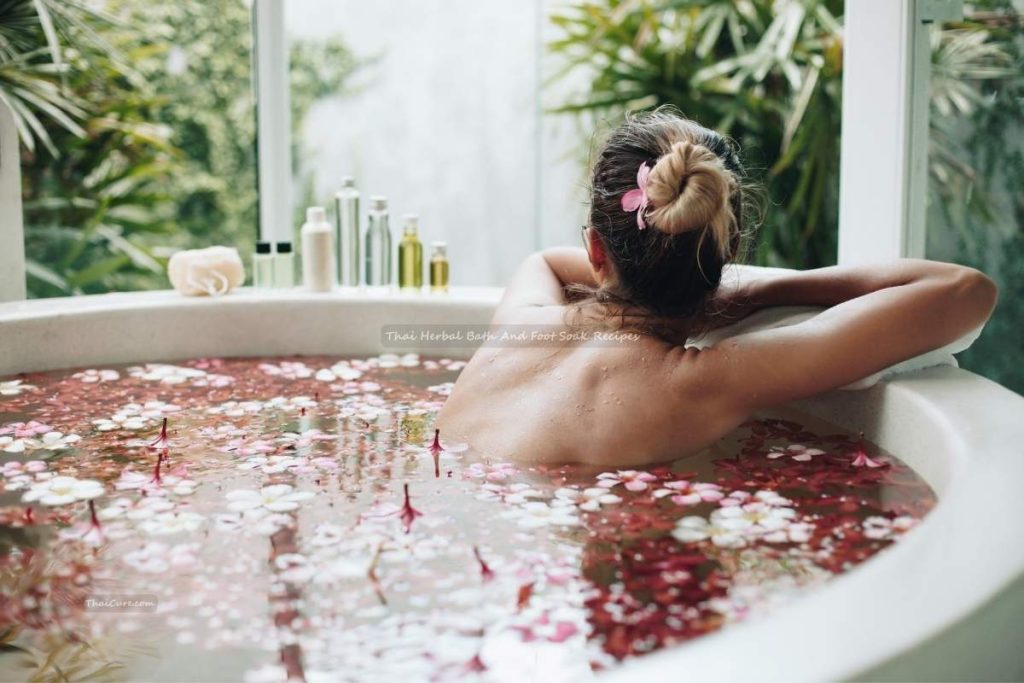
This guide explains how to select suitable ingredients, prepare safe herbal infusions, and make several Thai Herbal Bath And Foot Soak Recipes at home.
👉 “To expand a gentle home self-care routine, readers may also explore these Facial Lifting Massage Tips For Beginners.”
What Is A Thai Herbal Bath Or Foot Soak?
A Thai herbal bath is warm bathwater infused with herbs, roots, flowers, citrus peel, or other aromatic plant ingredients. A foot soak follows the same basic idea but uses a smaller basin filled with enough water to cover the feet and ankles.
Thai herbal wellness traditions commonly use plants for their fragrance, warmth, cooling sensation, or connection with everyday self-care. The exact ingredients vary according to personal preference, local availability, and family traditions.
Some recipes smell fresh and citrus-like, while others feel warming, earthy, floral, or gently cooling.
Thai Herbal Bath And Foot Soak Recipes may be used to:
- Create a relaxing home-spa experience
- Warm and refresh tired feet
- Soften the skin before ordinary foot care
- Add a pleasant herbal aroma to bath time
- Encourage a quiet break from work and screens
- Introduce beginners to Thai herbal self-care
The experience should feel pleasant and comfortable. Stop immediately if the water or ingredients cause burning, itching, dizziness, or irritation.
Popular Thai Herbs And Ingredients
You do not need many ingredients to create an enjoyable soak. Starting with one or two familiar herbs makes it easier to understand how your skin responds.
Lemongrass
Lemongrass has a clean citrus fragrance and is widely used in Thai food, drinks, and spa products. Bruising or lightly crushing the stalk helps release its aroma.
Ginger
Fresh ginger creates a warm, spicy scent. Use only a modest amount, particularly if your skin is sensitive, because concentrated ginger may feel irritating.
Turmeric
Turmeric adds a warm, earthy quality and a bright yellow colour. It can stain towels, baths, clothing, skin, and grout, so use it sparingly.
Pandan Leaves
Pandan has a soft, sweet, grassy fragrance. Fresh leaves can be tied into a knot, sliced, or lightly crushed before infusion.
Kaffir Lime Peel
Kaffir lime peel has a strong citrus aroma. Only a small amount is needed. Avoid rubbing fresh citrus directly on the skin, and rinse well after the soak.
Butterfly Pea Flowers
Dried butterfly pea flowers can give the water a blue or purple tone. They are often added for visual appeal and a gentle home-spa atmosphere.
Thai Basil Or Mint
Fresh Thai basil or mint can add a refreshing herbal scent. People with reactive skin should patch-test these ingredients first.
Salt
Plain sea salt or Epsom salt is sometimes added to foot soaks. Salt can feel drying or uncomfortable on cracked, freshly shaved, or damaged skin, so it is optional rather than essential.
How To Prepare A Herbal Infusion
Placing chopped plants directly into a bath can leave pieces in the water and make cleaning difficult. Preparing an infusion first is usually easier.
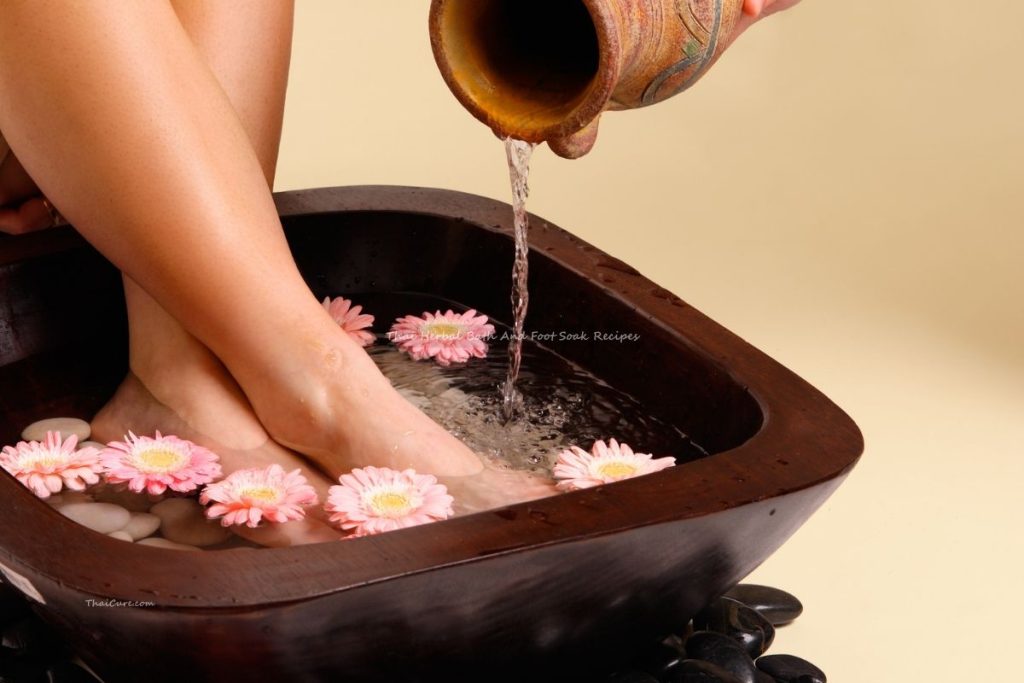
Follow this basic method:
- Rinse fresh ingredients carefully.
- Chop, slice, bruise, or lightly crush the herbs.
- Place them in a heat-safe bowl or saucepan.
- Pour hot water over the ingredients.
- Cover and leave them to infuse for approximately 10 to 15 minutes.
- Strain the liquid.
- Add the infusion to a bath or basin of comfortably warm water.
Do not use boiling water directly on the skin. Test the final temperature with your wrist or elbow before placing your feet or body in the water.
A reusable muslin bag is another practical option. Place the herbs inside the bag and allow it to steep in warm water without releasing loose pieces.
Lemongrass And Kaffir Lime Foot Soak
This fresh citrus blend is one of the easiest Thai Herbal Bath And Foot Soak Recipes for beginners.
Ingredients
- Two lemongrass stalks
- A small piece of kaffir lime peel
- Approximately one litre of hot water for infusing
- A basin of comfortably warm water
Method
Bruise the lemongrass with the back of a knife and cut it into short pieces. Add it to a heat-safe bowl with the lime peel.
Pour hot water over the ingredients, cover the bowl, and leave it for 10 to 15 minutes. Strain the infusion and pour it into a basin of warm water.
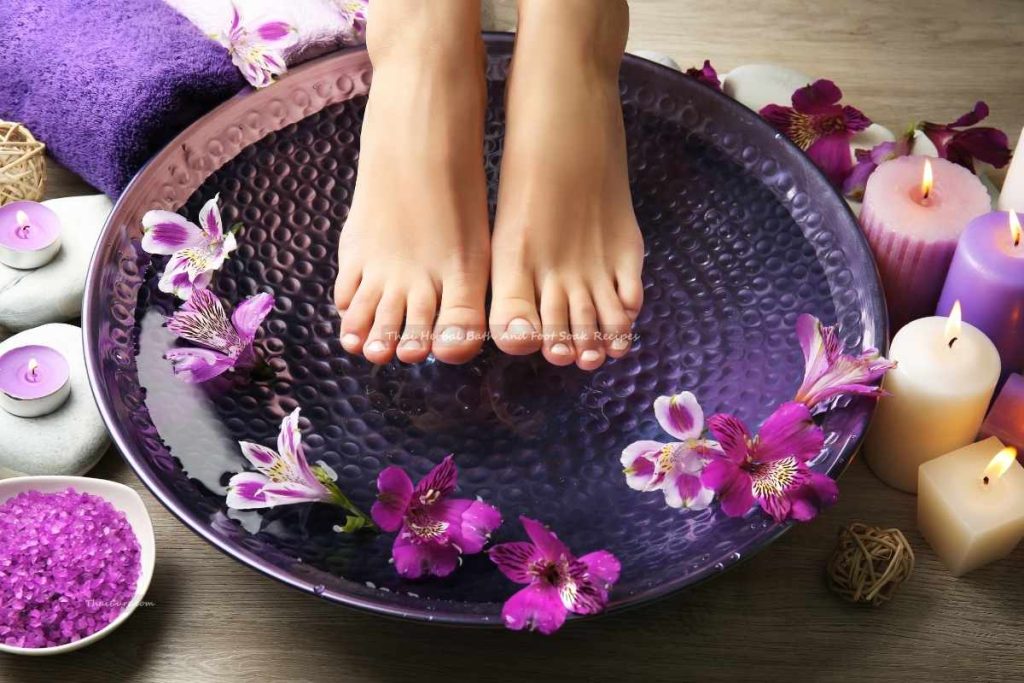
Soak your feet for approximately 10 to 15 minutes. Dry them carefully afterward, especially between the toes.
Use only the coloured outer part of the lime peel when possible, as too much white pith may make the infusion smell bitter.
Ginger And Pandan Warming Foot Soak
This recipe combines the spicy aroma of ginger with the softer fragrance of pandan.
Ingredients
- Four or five thin slices of fresh ginger
- Two fresh pandan leaves
- Approximately one litre of hot water
- A basin of warm water
Method
Rinse the ginger and pandan. Slice the ginger and tie or cut the pandan leaves into smaller pieces.
Place both ingredients in a bowl, cover them with hot water, and allow the mixture to infuse for 10 minutes.
Strain the liquid into your foot basin and add enough warm water to reach a comfortable temperature.
Use the soak for 10 to 15 minutes. Choose a smaller amount of ginger when trying the recipe for the first time.
Lemongrass And Butterfly Pea Herbal Bath
This colourful bath recipe creates a gentle Thai-inspired home-spa experience.
Ingredients
- Three lemongrass stalks
- One small handful of dried butterfly pea flowers
- Approximately two litres of hot water
- A bath filled with comfortably warm water
Method
Bruise and chop the lemongrass. Place it in a large heat-safe bowl with the butterfly pea flowers.
Add the hot water, cover, and infuse for 15 minutes. Strain the mixture before adding it to your bath.
Relax in the water for approximately 15 to 20 minutes. Rinse the bath afterward to prevent colour from settling on the surface.
This is one of the most visually appealing Thai Herbal Bath And Foot Soak Recipes, but the colour may vary according to the amount and quality of the flowers.
Simple Turmeric And Ginger Foot Soak
Turmeric and ginger produce a warm, earthy infusion. Both ingredients should be used in moderation.
Ingredients
- One-quarter teaspoon of turmeric powder
- Three thin slices of fresh ginger
- Approximately one litre of hot water
- A basin of warm water
Method
Add the turmeric and ginger to a heat-safe bowl. Pour in the hot water and stir carefully.
Allow the ingredients to infuse for approximately 10 minutes. Strain the liquid through fine cloth if you want to reduce turmeric residue.
Add the infusion to a basin of warm water and soak your feet for no longer than 10 minutes when using the recipe for the first time.
Turmeric can stain pale towels, clothing, nails, and some bath surfaces. Use a dark towel and clean the basin immediately afterward.
Do not use this recipe on broken, irritated, or recently shaved skin.
Pandan And Mint Cooling Foot Soak
This simple blend has a fresh fragrance and may feel especially pleasant after a warm day.
Ingredients
- Two pandan leaves
- A small handful of fresh mint
- Approximately one litre of hot water
- A basin of lukewarm or comfortably cool water
Method
Rinse and lightly crush the pandan and mint. Place them in a bowl and pour hot water over them.
Cover and infuse for 10 minutes. Strain the liquid and allow it to cool before adding it to the basin.
Soak your feet for approximately 10 to 15 minutes.
The water should feel refreshing rather than extremely cold. Very cold soaking may be unsuitable for people with circulation problems or reduced sensation.
Lemongrass And Salt Bath
This minimalist recipe uses ingredients that are easy to find.
Ingredients
- Three lemongrass stalks
- One to two tablespoons of plain sea salt
- Approximately two litres of hot water
- A bath filled with comfortably warm water
Method
Bruise and chop the lemongrass. Infuse it in hot water for 10 to 15 minutes, then strain the liquid.
Pour the infusion into the bath and stir in the salt until it dissolves.
Enjoy the bath for approximately 15 minutes, then rinse your skin with clean water if any salt residue remains.
Leave out the salt if you have very dry, cracked, freshly shaved, or irritated skin.
Butterfly Pea And Pandan Bath
Butterfly pea and pandan create a colourful bath with a mild floral and grassy fragrance.
Ingredients
- A small handful of dried butterfly pea flowers
- Two pandan leaves
- Approximately two litres of hot water
- A warm bath
Method
Rinse the pandan leaves and cut them into sections. Add the pandan and butterfly pea flowers to a large bowl.
Cover with hot water and leave the mixture to infuse for approximately 15 minutes.
Strain the liquid and add it to the bathwater. Test the temperature before entering.
This is one of the gentler Thai Herbal Bath And Foot Soak Recipes for people who prefer less spicy or citrus-heavy ingredients, although a patch test is still sensible.
Aromatic Thai Herb Bath Bag
A reusable cloth bag helps keep herbs contained and reduces cleanup.
Ingredients
- Two tablespoons of dried lemongrass
- One tablespoon of dried pandan
- One tablespoon of dried butterfly pea flowers
- A clean muslin or cotton bag
Method
Place the dried ingredients inside the cloth bag and tie it securely.
Allow the bag to steep in the bath while the water is running. Gently squeeze it with clean hands to release more colour and aroma.
Remove the bag before draining the bath. Do not store it while wet, as damp plant material can spoil or grow mould.
For future use, prepare a fresh dry mixture instead of repeatedly reusing the same soaked herbs.
How Long Should You Soak?
For most beginners, 10 to 20 minutes is enough. Longer soaking is not necessarily better and may dry the skin or make some people feel light-headed.
A practical starting point is:
- 10 to 15 minutes for a foot soak
- 15 to 20 minutes for a full bath
- A shorter session when trying a new ingredient
- Immediate removal if irritation develops
Thai Herbal Bath And Foot Soak Recipes should be comfortable from beginning to end. Do not remain in the water because you feel obligated to complete a set time.
Important Safety Advice
Natural ingredients can still cause irritation or allergic reactions. Safe preparation is more important than using a large number of herbs.
Before trying a recipe:
- Perform a patch test with the cooled infusion.
- Use clean herbs, containers, and equipment.
- Check the water temperature carefully.
- Avoid broken, infected, sunburned, or inflamed skin.
- Do not use ingredients to which you are allergic.
- Keep strong mixtures away from the eyes.
- Rinse the skin if itching or burning occurs.
- Dry the feet thoroughly after soaking.
- Clean the bath or basin immediately after use.
People with diabetes, reduced sensation, circulation problems, serious skin conditions, open wounds, or ongoing foot problems should seek professional advice before using hot foot soaks.
Pregnant or breastfeeding people should ask a qualified healthcare professional before using unfamiliar herbs or essential oils.
Should You Add Essential Oils?
Essential oils are highly concentrated and do not dissolve directly in water. Drops placed straight into bathwater may remain on the surface and contact the skin in concentrated form.
Beginners do not need essential oils to make effective Thai Herbal Bath And Foot Soak Recipes. Fresh or dried herbs usually provide enough aroma.
When choosing to use essential oils, follow professional dilution guidance and use a suitable bath dispersant. Never assume that adding more drops will create a better treatment.
Avoid essential oils around babies and young children unless a qualified professional has confirmed that the product and dilution are appropriate.
Fresh Herbs Or Dried Herbs?
Both fresh and dried herbs can work well.
Fresh herbs often have a lively aroma and are widely available in Thai markets. They should be rinsed carefully and used before they spoil.
Dried herbs are easier to measure and store. Keep them in a sealed container away from heat, moisture, and direct sunlight.
Discard any herbs that show mould, moisture damage, insects, or an unusual smell.
When replacing dried herbs with fresh ones, you may need a larger quantity because fresh plants contain more water.
Common Mistakes To Avoid
Using too many ingredients can create an overpowering mixture and make it difficult to identify the cause of irritation. Begin with one or two herbs.
Other common mistakes include:
- Making the water excessively hot
- Applying undiluted essential oils
- Using strong spices on damaged skin
- Leaving wet herbs at room temperature
- Reusing a prepared soak several days later
- Expecting the bath to treat a medical condition
- Failing to clean turmeric or flower residue promptly
- Walking on slippery floors with wet feet
Simple preparation usually creates the safest and most enjoyable result.
How To Create A Relaxing Home Ritual
The herbs are only one part of the experience. The surroundings can also help turn a simple soak into a calming break.
Before beginning:
- Put your phone away.
- Prepare a clean towel.
- Choose comfortable lighting.
- Keep drinking water nearby.
- Sit somewhere stable during a foot soak.
- Allow enough time so you do not need to rush.
- Follow the soak with fragrance-free moisturiser if your skin feels dry.
You can also combine Thai Herbal Bath And Foot Soak Recipes with quiet music, slow breathing, or a few minutes of rest.
The goal is not to reproduce a luxury spa. It is to create a manageable form of self-care at home.
Storing Herbal Bath Ingredients
Dry ingredients can be prepared in advance, but wet mixtures should generally be used immediately.
Store dried herbs:
- In clean, airtight containers
- Away from humidity
- Away from direct sunlight
- With clear labels and dates
- Separately from strong-smelling household products
Avoid storing a water-based herbal infusion for future baths. Fresh plant mixtures can spoil, particularly in warm climates.
Preparing only the amount you need is safer and helps preserve the aroma.
👉 “For more calming home-wellness ideas, readers may also explore these Thai herbal remedies for relaxation and stress relief.”
Conclusion
Thai herbal baths and foot soaks offer a simple way to enjoy the fragrance and atmosphere of traditional Thai herbs at home.
Lemongrass, pandan, ginger, turmeric, butterfly pea, mint, and kaffir lime peel can all be used in modest amounts to create different experiences. Some blends feel warm and earthy, while others smell fresh, citrus-like, or gently floral.
The best Thai Herbal Bath And Foot Soak Recipes are simple, clean, and comfortable. Begin with a small number of ingredients, patch-test unfamiliar herbs, control the water temperature, and stop if irritation develops.
These recipes are intended for relaxation and ordinary self-care. They should not replace professional treatment for infections, injuries, persistent pain, or ongoing skin and foot problems.
FAQ
What Are Thai Herbal Bath And Foot Soak Recipes?
Thai Herbal Bath And Foot Soak Recipes are simple preparations that infuse warm water with Thai herbs, flowers, roots, or citrus peel to create an aromatic home self-care experience.
Which Thai Herb Is Best For Beginners?
Lemongrass is a practical starting point because it is easy to find and has a familiar citrus fragrance. Pandan is another gentle option.
How Often Can I Use A Herbal Foot Soak?
Many people use a gentle foot soak occasionally or once or twice a week. Reduce the frequency if your skin becomes dry or irritated.
Can I Use Fresh Herbs Directly In The Bath?
Yes, but placing them in a muslin bag or making a strained infusion first creates less mess and makes the bath easier to clean.
Can Herbal Foot Soaks Treat Fungal Infections?
Do not rely on a foot soak to treat a fungal infection. Seek advice from a pharmacist, doctor, or other qualified healthcare professional.
Are Thai Herbal Soaks Safe For Sensitive Skin?
They may be suitable when mild ingredients are used, but sensitive skin can react to natural products. Patch-test the cooled infusion first and use only one or two ingredients.
Can I Add Essential Oils?
Essential oils require careful dilution and do not mix naturally with water. Beginners can leave them out and use fresh or dried herbs instead.
Can I Store A Prepared Herbal Infusion?
It is safest to prepare only what you need and use it immediately. Water-based herbal mixtures can spoil quickly, especially in warm conditions.
How Warm Should The Water Be?
The water should feel comfortably warm, never painfully hot. People with diabetes, reduced sensation, or circulation problems should seek professional advice before using heated foot soaks.
Do Herbal Baths Detox The Body?
There is no good reason to describe a bath as removing toxins from the body. Its realistic benefits are warmth, fragrance, relaxation, and ordinary skin-softening care.


