
- Introduction
- Thai Herbal Care Is Part Of A Broader Medical Tradition
- Assessment Comes Before Herbal Selection
- Why Individual Assessment Matters
- Herbs Can Be Prepared In Different Forms
- Herbal Decoctions And Liquid Preparations
- Powders And Prepared Herbal Products
- External Herbal Preparations
- Herbal Compresses In Traditional Care
- Herbs And Traditional Thai Massage
- Why Combining Treatments Requires Judgment
- Herbal Selection Is More Than Choosing A Famous Thai Herb
- Identification And Quality Matter
- Preparation Can Change How An Herb Is Used
- Dosage Requires Professional Guidance
- More Is Not Necessarily Better
- Medicines And Herbs Can Interact
- Practitioner Training Matters
- Traditional Care And Self-Treatment Are Different
- Why Online Herbal Lists Can Be Misleading
- Traditional Herbal Care Does Not Replace Every Type Of Healthcare
- Follow-Up Is Part Of Responsible Care
- Herbal Care In Hospitals And Formal Settings
- Traditional Does Not Mean Unregulated
- A Brief Note About Cannabis
- Questions To Ask A Traditional Practitioner
- What To Tell The Practitioner
- A Practical Difference Between Professional Care And DIY Herbal Use
- Common Misunderstandings About Thai Herbal Care
- Conclusion
- FAQ
- What Do Thai Herbal Medicine Practitioners Do?
- How Do Practitioners Choose Thai Herbs?
- What Forms Can Thai Herbal Preparations Take?
- Can Herbs Be Used With Thai Massage?
- What Is A Thai Herbal Compress?
- Why Does Herbal Dosage Need Professional Guidance?
- Are Thai Herbs Safe Because They Are Natural?
- How Is Professional Herbal Care Different From Self-Treatment?
- Should I Tell My Doctor About Herbal Products?
- Are Thai Herbal Medicine Practitioners Professionally Regulated?
Introduction
Herbs are an important part of Thai traditional medicine, but professional herbal care involves considerably more than simply choosing a plant that is traditionally associated with a particular complaint.
In Thailand, licensed Thai traditional medicine and applied Thai traditional medicine practitioners can provide examination, diagnosis, and treatment within their professional scope. Thailand also has licensed traditional and complementary medicine practitioners working within its health system.
For this reason, understanding Thai herbal medicine practitioners means looking at the complete care process: assessment, selection of an appropriate preparation, consideration of the individual, preparation and dosage, follow-up, and decisions about whether another form of care may be more appropriate.

Herbal treatments may also form only one part of traditional care. Depending on the practitioner and the individual’s needs, herbal preparations may be considered alongside traditional massage, herbal compresses, external applications, or other recognised Thai traditional medicine practices.
This guide explains how Thai herbal medicine practitioners approach herbs professionally, why herbal care is individualised, and why professional herbal treatment should not be confused with experimenting with remedies at home.
👉 “Readers interested in traditional herbal care may also explore these simple herbal relaxation habits for everyday calm for gentle wellness inspiration.”
Thai Herbal Care Is Part Of A Broader Medical Tradition
Thai traditional medicine is a recognised health tradition in Thailand rather than simply a collection of household herbal remedies. Thailand’s Department of Thai Traditional and Alternative Medicine describes a health workforce that includes licensed Thai traditional medicine practitioners, applied Thai traditional medicine practitioners, and trained traditional medicine assistants.
Traditional medicine more broadly is defined by the World Health Organization as encompassing established systems of health knowledge and practice that developed in historical and cultural contexts distinct from biomedicine. WHO also notes that traditional medicine commonly uses personalised and holistic approaches.
That broader framework is important when considering Thai herbal medicine practitioners.
Professional herbal care is not simply:
“Problem X equals herb Y.”
Instead, practitioners may consider the person’s overall presentation before deciding whether herbs are appropriate and which form of preparation is suitable.
Assessment Comes Before Herbal Selection
A professional consultation normally begins with assessment rather than immediately recommending an herb.
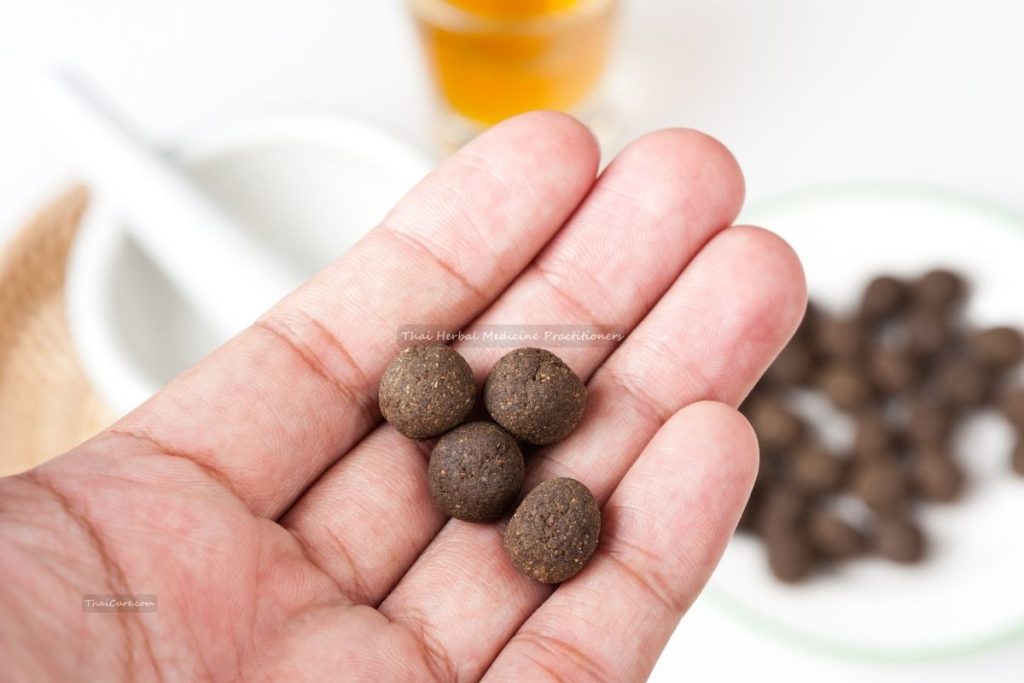
Within Thai traditional medicine practice, licensed practitioners may perform examination, diagnosis, and treatment according to their professional scope.
Depending on the setting and practitioner, an assessment may consider information such as:
- The main concern
- When it began
- How it has changed
- General physical condition
- Existing health conditions
- Medicines already being taken
- Previous reactions to herbs or medicines
- Other treatments currently being used
- Whether referral or further medical assessment is needed
The exact traditional diagnostic framework can vary with training and professional discipline.
The important point is that Thai herbal medicine practitioners should evaluate the person rather than selecting herbal products only from a symptom list.
Why Individual Assessment Matters
Two people describing a similar symptom may not necessarily receive the same recommendation.
Differences may include:
- Age
- Overall health
- Other medical conditions
- Medicines
- Allergies
- Pregnancy or breastfeeding
- Previous treatment
- Duration of symptoms
- Severity
- Individual response
These differences can affect whether a particular herbal preparation is appropriate.
This is one reason qualified Thai herbal medicine practitioners should be distinguished from general wellness advice found online.
Herbs contain biologically active substances, and herbal products can have adverse effects or interact with medicines. NCCIH specifically advises healthcare professionals and patients to consider possible herb-drug interactions.
Herbs Can Be Prepared In Different Forms
Traditional herbal care does not rely on a single preparation method.
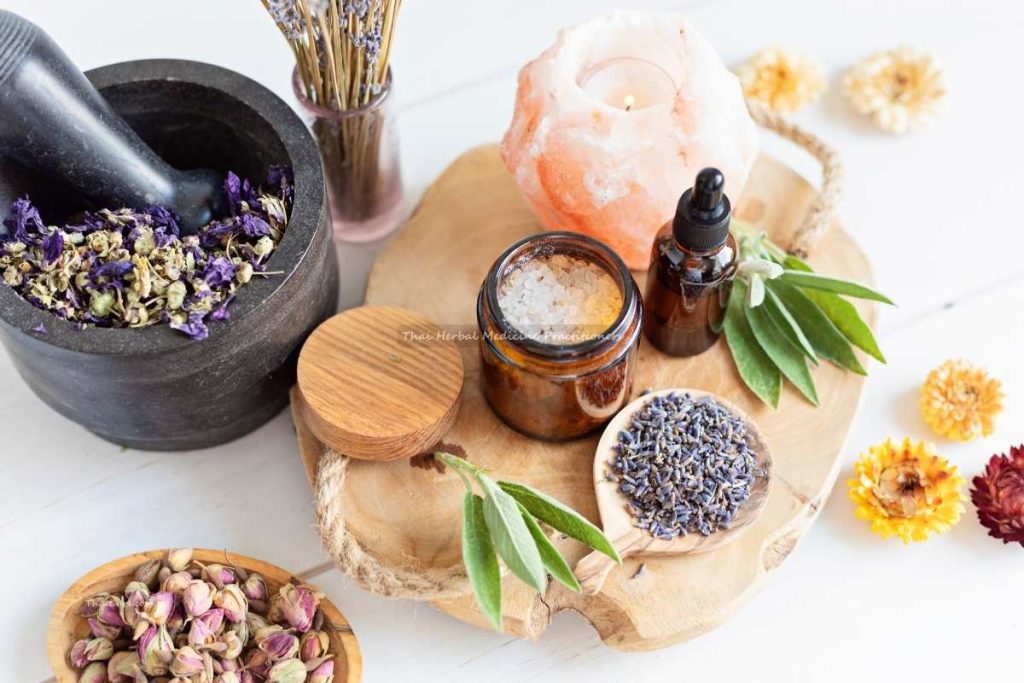
Herbal medicine broadly can include fresh or dried plant materials, powders, teas and other liquid preparations, extracts, capsules, and related products.
Within Thai traditional care, Thai herbal medicine practitioners may work with different forms depending on professional practice, the intended purpose, and the available regulated preparation.
Common categories can include:
- Herbal decoctions or other liquid preparations
- Powders
- Capsules or prepared herbal products
- External herbal preparations
- Balms or oils
- Herbal compress preparations
- Herbal baths or related external applications
The preparation method matters because different forms are not automatically interchangeable.
Herbal Decoctions And Liquid Preparations
Traditional herbal formulas may sometimes be prepared as liquids from selected plant materials.
Professional preparation requires attention to:
- Correct plant identification
- Correct ingredients
- Appropriate proportions
- Preparation method
- Storage
- Intended amount and frequency
This is very different from taking an unidentified collection of herbs and boiling them at home.
When Thai herbal medicine practitioners recommend a preparation, the formula and method should follow their professional knowledge and the relevant standards of practice.
Powders And Prepared Herbal Products
Herbal ingredients may also appear as powders or professionally manufactured products.
Thailand regulates herbal products, and the Thai FDA’s herbal products division oversees areas including manufacturing, importation, sale, storage, and training associated with herbal-product operations.
This regulatory dimension matters because herbal care is not simply about whether a plant has a long history of traditional use.
Quality can also depend on:
- Identification
- Processing
- Manufacturing
- Storage
- Contamination control
- Labelling
- Appropriate use
Thai herbal medicine practitioners therefore work within a much more structured environment than someone choosing an unverified herbal product from a social media recommendation.
External Herbal Preparations
Not every herb used in traditional care is intended to be swallowed.
Some traditional preparations are used externally.
These may include herbal ingredients incorporated into:
- Compresses
- Balms
- Oils
- External preparations
- Baths or soaks
Whether an external preparation is suitable still depends on factors such as the skin condition, sensitivity, allergies, and the purpose of treatment.
“External” does not automatically mean risk-free.
Herbal Compresses In Traditional Care
Thai herbal compresses are one of the most recognisable examples of herbs being combined with another traditional therapy.
A compress typically brings together herbal materials and heat for external application as part of a traditional care session.
In professional settings, Thai herbal medicine practitioners or appropriately trained traditional-care professionals may consider whether this type of treatment is suitable as part of a wider care plan.
The important distinction is that a herbal compress is not simply a bag of pleasant-smelling plants.
Professional use should consider suitability, temperature, skin condition, and the person’s overall circumstances.
Herbs And Traditional Thai Massage
Herbal care may also be used alongside traditional Thai massage rather than as an isolated treatment.
Thai traditional medicine encompasses several therapeutic approaches, and Thailand’s traditional medicine workforce includes practitioners as well as trained assistants in Nuad Thai and related traditional services.
Depending on the situation, care may involve:
- Traditional massage
- Herbal preparations
- Herbal compresses
- External preparations
- Other traditional approaches within professional scope
This does not mean every person receiving Thai massage needs herbs.
Thai herbal medicine practitioners should select treatment components according to the individual rather than applying the same package automatically.
Why Combining Treatments Requires Judgment
Combining several traditional therapies can appear attractive because each treatment has a different purpose.
However, more treatment is not automatically better treatment.
A practitioner may need to consider:
- Whether massage is appropriate
- Whether heat should be used
- Whether an external herbal product is suitable
- Whether an oral herbal preparation is appropriate
- Whether conventional medical evaluation is needed instead
Professional judgment is therefore central to the work of Thai herbal medicine practitioners.
Herbal Selection Is More Than Choosing A Famous Thai Herb
Thailand is associated with many well-known plants, but popularity does not determine suitability.
An herb may be:
- Common in food
- Used traditionally
- Available as a commercial product
- Included in a traditional formula
- Used externally
- Used only under particular circumstances
These uses should not be treated as identical.
A qualified practitioner considers the preparation and the person, not merely the reputation of an individual herb.
WHO emphasises that traditional medicine products still require attention to quality, safety, and effectiveness.
Identification And Quality Matter
Herbal products begin with plant materials, and correct identification is important.
Different plant species can:
- Look similar
- Have similar common names
- Contain different compounds
- Require different preparation
- Have different safety profiles
Processing and storage can also affect quality.
This is why Thai herbal medicine practitioners should rely on recognised preparations and appropriate supply systems rather than uncertain ingredients.
Professional herbal care depends on knowing what the preparation actually contains.
Preparation Can Change How An Herb Is Used
The same plant cannot necessarily be treated the same way in every preparation.
An herb might appear in:
- Food
- A traditional formula
- An external product
- A professionally manufactured herbal medicine
The concentration and intended use can be different.
This is another reason internet statements such as “this herb is safe because people eat it” can be misleading.
Food use does not automatically establish the safety of a concentrated medicinal preparation.
Dosage Requires Professional Guidance
Dosage is one of the clearest differences between professional treatment and casual self-treatment.
The appropriate amount of an herbal preparation can depend on:
- The specific product
- The formulation
- Concentration
- Individual circumstances
- Other medicines
- Duration of use
- Professional assessment
Therefore, this article intentionally does not provide dosing instructions.
Thai herbal medicine practitioners are better placed to determine whether a medicinal herbal preparation is appropriate and how it should be used within their professional scope.
More Is Not Necessarily Better
A common misunderstanding with natural products is that increasing the amount should increase the benefit.
That assumption can be unsafe.
Herbal medicines may cause side effects, interact with medicines, or create other safety concerns. NCCIH highlights both herb-drug interactions and direct toxicity as issues that need consideration.
Professional Thai herbal medicine practitioners therefore consider suitability rather than encouraging indiscriminate use.
Medicines And Herbs Can Interact
Anyone considering medicinal herbal treatment should tell the practitioner about medicines and supplements already being used.
Interactions can sometimes alter how medicines work or increase unwanted effects. NCCIH advises people using complementary approaches to discuss them with their healthcare providers, particularly when herbal products are involved.
This is particularly relevant for people taking regular medication.
Do not assume that an herbal product and a conventional medicine are automatically safe to combine because they come from different medical traditions.
Practitioner Training Matters
Professional training is one of the main reasons Thai herbal medicine practitioners should not be confused with unqualified sellers or online wellness personalities.
Thailand recognises licensed practitioners in Thai traditional medicine and applied Thai traditional medicine, and professional practice is regulated. Official Thai traditional medicine materials describe licensed practitioners providing examination, diagnosis, and treatment services.
Training helps practitioners understand areas such as:
- Traditional diagnostic principles
- Herbal materia medica
- Preparation
- Appropriate use
- Contraindications
- Professional responsibilities
- When referral may be necessary
Consumers should therefore pay attention to professional qualifications rather than assuming that anyone selling herbs is a traditional medicine practitioner.
Traditional Care And Self-Treatment Are Different
This distinction is essential.
Professional traditional herbal care involves assessment and clinical judgment.
Self-treatment may involve:
- Searching symptoms online
- Choosing an herb from a list
- Buying several supplements
- Combining products
- Guessing a dose
- Continuing despite side effects
Those are not equivalent processes.
Thai herbal medicine practitioners assess whether herbal care is appropriate for an individual rather than recommending the same remedy to everyone with a similar complaint.
Why Online Herbal Lists Can Be Misleading
Articles titled “ten herbs for…” can be useful for learning about traditional ingredients, but they should not be treated as personalised treatment plans.
Such lists often omit:
- Dosage
- Formulation
- Medicine interactions
- Contraindications
- Product quality
- Individual medical history
- Reasons for choosing one formula over another
Educational herbal content is therefore best understood as background information.
Actual treatment decisions should involve appropriately qualified professionals.
Traditional Herbal Care Does Not Replace Every Type Of Healthcare
Traditional medicine can form part of healthcare, but not every symptom should be managed with herbs.
A practitioner may identify circumstances that require:
- Further assessment
- Conventional medical investigation
- Emergency care
- Another healthcare professional
- A different treatment approach
WHO emphasises the importance of safety monitoring and appropriate regulation as traditional and complementary medicine becomes integrated into health systems.
Responsible Thai herbal medicine practitioners should work within professional limits rather than presenting herbs as a universal solution.
Follow-Up Is Part Of Responsible Care
The response to treatment matters.
Follow-up can help determine:
- Whether symptoms changed
- Whether an unwanted reaction occurred
- Whether the preparation remains appropriate
- Whether treatment should be changed
- Whether further assessment is necessary
This is another important difference between professional care and buying a remedy independently.
A treatment plan should not continue automatically simply because an herb is traditional.
Herbal Care In Hospitals And Formal Settings
Thai traditional medicine is not confined to informal community practice.
Thailand has incorporated traditional and complementary medicine practitioners into parts of its health system. Official Department of Thai Traditional and Alternative Medicine material describes licensed traditional medicine professionals within healthcare services.
WHO documentation has also highlighted herbal preparation within a traditional pharmacy at a Thai university hospital for use in Thai medicinal treatments.
These formal settings illustrate the professional side of Thai herbal medicine.
Traditional Does Not Mean Unregulated
People sometimes assume that traditional herbal care exists outside modern safety systems.
In reality, regulation, professional licensing, product standards, and safety monitoring have important roles.
WHO notes that many countries regulate herbal medicines and encourages safety monitoring for traditional and complementary products.
Thailand also maintains specific regulatory structures for herbal products through the Thai FDA.
This is why professional Thai herbal medicine practitioners should be viewed differently from informal claims about herbs made without clinical or regulatory context.
A Brief Note About Cannabis
Cannabis has been discussed within Thai herbal and traditional medicine contexts, but it should not dominate a general explanation of Thai herbal care.
Its legal, medical, and regulatory situation can change, and it has different safety considerations from many ordinary culinary herbs.
For Thaicure, detailed cannabis information is better kept on the site’s dedicated cannabis pages rather than treating it as a standard example throughout this guide.
The broader principle remains the same: medicinal substances should be considered within appropriate professional and legal guidance rather than used as casual self-treatment.
Questions To Ask A Traditional Practitioner
When discussing herbal care, useful questions include:
- What type of traditional medicine qualification do you hold?
- Why is this preparation being considered?
- Is it intended for internal or external use?
- Are there medicines or conditions that could make it unsuitable?
- How should the preparation be obtained?
- What unwanted reactions should be reported?
- How long should the treatment be reviewed before reassessment?
- Should my regular doctor know that I am using it?
These questions help make consultations with Thai herbal medicine practitioners clearer and more transparent.
What To Tell The Practitioner
Provide accurate information about:
- Current medicines
- Supplements
- Known allergies
- Existing medical conditions
- Previous adverse reactions
- Other complementary treatments
- Pregnancy or breastfeeding when relevant
- Recent changes in health
Do not assume that a practitioner already knows what other treatments you use.
Complete information can help reduce avoidable risks.
A Practical Difference Between Professional Care And DIY Herbal Use
A simplified comparison can be helpful.
Professional Traditional Herbal Care
- Begins with assessment
- Considers individual suitability
- Uses practitioner knowledge
- Selects an appropriate preparation
- Considers dosage
- Reviews other medicines
- Monitors response
- Refers when necessary
Self-Treatment
- Often begins with an internet search
- May focus on one symptom
- May overlook medicine interactions
- May use uncertain product quality
- Can involve guessed amounts
- May continue without reassessment
The difference explains why Thai herbal medicine practitioners remain important even when herbal products are easily available.
Common Misunderstandings About Thai Herbal Care
Every Natural Product Is Safe
Natural origin does not eliminate side effects or interactions.
One Herb Treats One Problem
Professional traditional medicine can use more complex assessment and formulations.
Traditional Use Guarantees Suitability
Traditional use provides important historical knowledge but does not remove the need for individual safety assessment.
Herbal Treatment Can Always Be Combined With Medicines
Interactions are possible and should be considered.
More Herbs Produce Better Results
Adding more products can make treatment more complicated and may increase risk.
Anyone Selling Herbs Is A Qualified Practitioner
Professional qualifications and licensing matter.
Understanding these distinctions gives a more accurate picture of Thai herbal medicine practitioners and their role.
👉 “Readers interested in how herbs are used in traditional care may also explore this broader guide to Thai herbal medicine and wellness for more background on common practices and traditions.”
Conclusion
Thai traditional herbal care involves far more than selecting a famous herb from a list.
Licensed Thai traditional medicine practitioners can provide examination, diagnosis, and treatment within their professional scope, and Thailand has formal structures for traditional medicine practitioners and herbal products.
Thai herbal medicine practitioners begin with assessment because individual circumstances influence whether a herbal preparation is suitable.
Herbs may appear in different forms, including liquid preparations, powders, manufactured herbal products, external preparations, and herbal compresses. The form matters because products with the same plant name are not necessarily equivalent.
Traditional herbal care may also be combined with massage, compresses, or other traditional approaches when appropriate. Treatment should be selected according to the individual rather than automatically combining several therapies.
Professional training is therefore important. Thai herbal medicine practitioners need knowledge not only of traditional herbs, but also of preparation, suitability, contraindications, professional responsibilities, and situations that require referral.
Dosage should not be guessed. Herbal medicines can produce unwanted effects and interact with conventional medicines, which is why qualified guidance is important.
The clearest distinction is between professional care and self-treatment. Reading about Thai herbs can be educational, but an online article cannot provide the individual assessment performed by Thai herbal medicine practitioners.
For people interested in Thai herbal medicine, the safest approach is to treat traditional knowledge with the same seriousness applied to other forms of healthcare: understand the practitioner, know what preparation is being used, disclose other medicines, and seek qualified guidance when medicinal treatment is involved.
FAQ
What Do Thai Herbal Medicine Practitioners Do?
Thai herbal medicine practitioners may assess patients and provide traditional medicine treatment within their professional qualifications and legal scope. In professional care, herbs may form one part of a broader treatment approach.
How Do Practitioners Choose Thai Herbs?
Selection depends on professional assessment, the intended purpose, individual suitability, the preparation being considered, and other relevant health information.
What Forms Can Thai Herbal Preparations Take?
Herbal medicines can include fresh or dried plant materials, powders, liquid preparations, extracts, capsules, and external preparations.
Can Herbs Be Used With Thai Massage?
Traditional care may combine different approaches such as massage and herbal preparations when professionally appropriate. The combination should depend on the individual’s needs.
What Is A Thai Herbal Compress?
A Thai herbal compress is an external traditional preparation that combines herbal materials with heat. Suitability and safe application should still be considered.
Why Does Herbal Dosage Need Professional Guidance?
The appropriate amount may depend on the preparation, concentration, individual circumstances, other medicines, and intended duration. Herbal products can also interact with medicines.
Are Thai Herbs Safe Because They Are Natural?
Not automatically. Herbal medicines can have side effects, interactions, and quality concerns. WHO emphasises safety and quality monitoring for traditional medicines.
How Is Professional Herbal Care Different From Self-Treatment?
Professional care includes assessment, selection, consideration of suitability and dosage, monitoring, and referral when appropriate. Self-treatment may omit these safeguards.
Should I Tell My Doctor About Herbal Products?
Yes. Sharing information about complementary and herbal products helps healthcare professionals consider possible interactions and coordinate care.
Are Thai Herbal Medicine Practitioners Professionally Regulated?
Thailand recognises licensed Thai traditional medicine and applied Thai traditional medicine practitioners, and professional practice is regulated through the country’s traditional medicine framework.


