
- Introduction
- What Are Thai Wellness Herbs?
- Lemongrass
- Ginger
- Galangal
- Turmeric
- Pandan
- Makrut Lime
- Tamarind
- Butterfly Pea
- Holy Basil
- Mint
- Food, Tea, Extract, And Supplement Are Not The Same Thing
- Traditional Use Is Useful Context, Not Proof
- Start With Culinary Uses
- Herbal Drinks Can Be Simple
- Watch Added Sugar
- Read Herbal Product Labels
- Be Careful With Concentrated Extracts
- Herbal Products Can Interact With Medicines
- Pregnancy Requires Additional Caution
- Be Careful With Children
- Simple Ways To Explore Thai Wellness Herbs
- A Quick Thai Herb Reference
- How To Choose Herbal Products More Carefully
- Avoid Disease-Treatment Claims From Ordinary Foods
- When To Ask A Doctor Or Pharmacist
- Conclusion
- FAQ
- What Are Some Common Thai Wellness Herbs?
- Are Thai Herbs Mainly Used As Medicine?
- Is Using An Herb In Food The Same As Taking An Herbal Supplement?
- What Is Lemongrass Commonly Used For?
- What Is The Difference Between Ginger And Galangal?
- Is Turmeric Safe To Use?
- What Is Butterfly Pea Used For?
- Is Makrut Lime The Same As Kaffir Lime?
- Can Children Use Thai Herbal Products?
- What Is The Safest Way To Explore Thai Wellness Herbs?
Introduction
Thailand’s kitchens, markets, gardens, drinks, and traditional household practices are filled with aromatic plants.
Lemongrass may appear in soup or herbal tea. Ginger can be found in food and warming drinks. Galangal gives Thai dishes a distinctive aroma. Turmeric provides an earthy yellow colour, pandan gives desserts and drinks a characteristic fragrance, and butterfly pea produces a striking blue infusion.
These ingredients are often described as Thai wellness herbs, although many are also ordinary foods, spices, leaves, roots, or flowers used in everyday cooking.
That distinction matters.
Using an herb in soup or tea is not the same as using a concentrated extract, capsule, essential oil, or medicinal preparation. The dose, preparation, and potential risks can be very different.
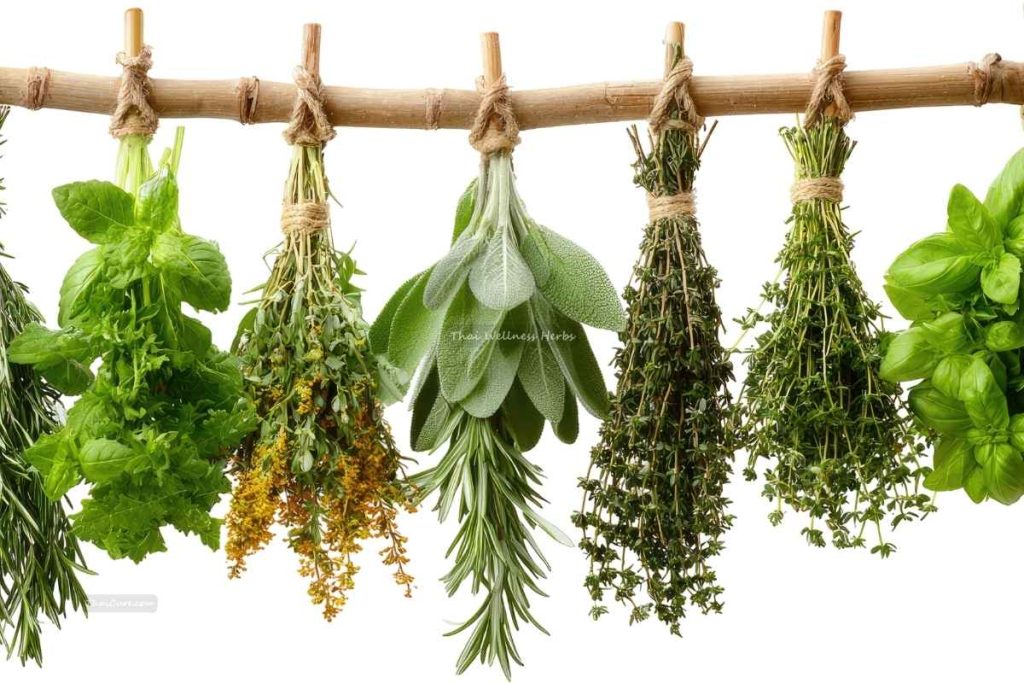
For that reason, this guide keeps the discussion practical. It looks at common Thai wellness herbs, where people encounter them, how they fit into traditional everyday wellness habits, simple non-medical uses, and basic cautions.
It does not attempt to prove that these herbs treat diseases or replace medical care.
Thailand also regulates herbal products separately from ordinary culinary ingredients, including requirements concerning registration, labels, and package information for products sold as herbal products.
👉 “Readers interested in everyday Thai wellness herbs may also explore these simple herbal relaxation habits for daily wellbeing for more gentle self-care ideas.”
What Are Thai Wellness Herbs?
The phrase Thai wellness herbs can describe plants commonly associated with Thai food, household traditions, herbal drinks, personal care, and traditional approaches to wellbeing.
Some are roots or rhizomes.
Others are:
- Leaves
- Flowers
- Fruits
- Peels
- Seeds
- Aromatic grasses
Many have overlapping culinary and traditional uses.
A plant may appear in curry one day and in a traditional herbal drink another day.
That does not mean every traditional use has been proven medically. Traditional use and scientific evidence are separate questions.
A practical approach is to understand the ingredient first and avoid turning everyday herbal traditions into exaggerated treatment claims.
Lemongrass
What It Is
Lemongrass is a fragrant tropical grass with long green leaves and a pale lower stalk.
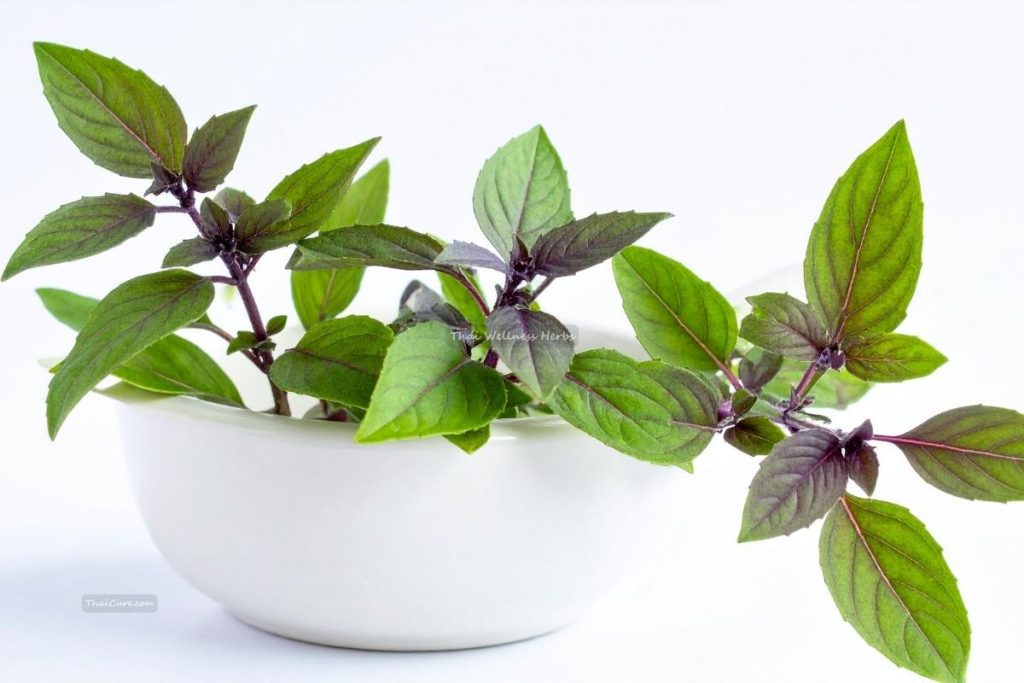
Its strong citrus-like aroma makes it one of the most recognisable Thai wellness herbs.
In Thai kitchens, the lower stalk is commonly bruised, sliced, or crushed to release its aroma.
Where People Commonly Encounter It
Lemongrass appears in many familiar Thai settings, including:
- Soups
- Curries
- Herbal drinks
- Marinades
- Markets
- Fresh herb sections
- Home gardens
It is particularly familiar as an aromatic ingredient in Thai cooking.
Traditional Everyday Wellness Context
In everyday Thai herbal traditions, lemongrass is often associated with fragrant herbal drinks and simple household wellness routines.
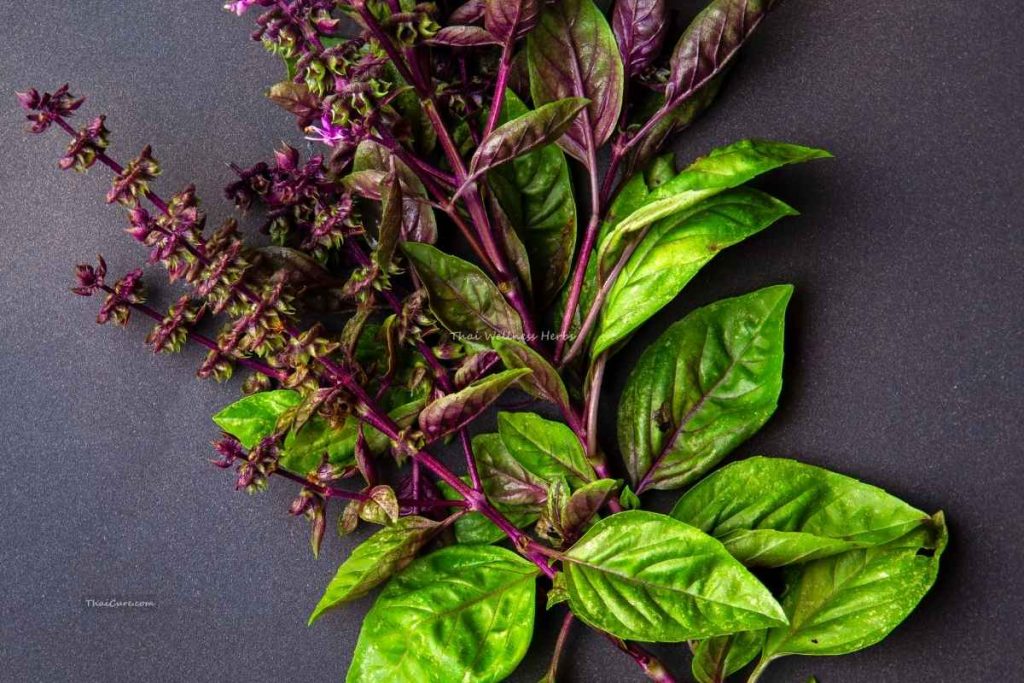
The emphasis here should remain on tradition rather than claiming that drinking lemongrass tea treats a specific illness.
Simple Non-Medical Uses
Lemongrass can be used to:
- Flavour soups
- Add aroma to curries
- Prepare a simple fragrant drink
- Add freshness to cooking
- Create aromatic household preparations
Among Thai wellness herbs, lemongrass is one of the easiest ingredients for beginners to recognise and use in ordinary food.
Basic Caution
Culinary use and concentrated lemongrass preparations are not equivalent.
Essential oils and concentrated supplements deserve additional caution and should not be treated like a cup of culinary herbal tea.
Pregnant people, children, or anyone taking medicines should obtain appropriate professional advice before using concentrated herbal preparations.
Ginger
What It Is
Ginger is an aromatic rhizome with a warm, spicy flavour.
Fresh ginger can be sliced, crushed, grated, or simmered, while dried ginger is also used in food and drinks.
It is one of the Thai wellness herbs that people may recognise well beyond Thailand.
Where People Commonly Encounter It
Ginger appears in:
- Stir-fries
- Soups
- Steamed dishes
- Herbal drinks
- Desserts
- Markets
- Fresh produce sections
In Thailand, warm ginger drinks are also easy to encounter in homes and shops.
Traditional Everyday Wellness Context
Ginger has a long history of traditional use in food and wellness preparations.
People often associate it with warming drinks and digestive comfort, but traditional reputation should not automatically be converted into a medical promise.
Simple Non-Medical Uses
Fresh ginger can be used to:
- Flavour meals
- Make a warm drink
- Add aroma to soups
- Combine with other culinary herbs
- Flavour desserts
This makes ginger one of the most versatile Thai wellness herbs for normal household use.
Basic Caution
Ginger consumed orally can cause effects such as abdominal discomfort, heartburn, diarrhoea, or irritation in some people. NCCIH also advises people who take medicines to discuss herbal products with a healthcare provider because potentially harmful herb–medicine interactions can occur.
Using ginger as a normal food ingredient is different from taking concentrated ginger supplements.
Galangal
What It Is
Galangal is another aromatic rhizome.
Although people unfamiliar with Thai cooking sometimes confuse it with ginger, the two have different flavours and aromas.
Galangal is firmer and has a sharper, more distinctive fragrance.
Where People Commonly Encounter It
Galangal is frequently found in:
- Thai soups
- Curry pastes
- Markets
- Herb bundles
- Fresh produce sections
- Traditional cooking
It is particularly associated with dishes where its aromatic character is part of the flavour base.
Traditional Everyday Wellness Context
Galangal has a long history in regional culinary and herbal traditions.
Within an article about Thai wellness herbs, the safest way to describe this is as part of traditional food and household herbal culture rather than presenting it as a treatment.
Simple Non-Medical Uses
Galangal can be:
- Sliced into soups
- Added to curry pastes
- Used to flavour broths
- Combined with lemongrass and makrut lime leaves
Because galangal can be fibrous, it is often used mainly to infuse flavour rather than eaten in large pieces.
Basic Caution
Normal culinary use should not be confused with medicinal doses, concentrated extracts, or supplements.
If a galangal product is sold specifically as an herbal supplement, read its ingredients and directions rather than assuming it is equivalent to galangal used in food.
Turmeric
What It Is
Turmeric is a yellow-orange rhizome closely associated with cooking, colouring, and traditional herbal preparations.
Fresh turmeric resembles a small root, while dried turmeric is commonly sold as a bright yellow powder.
Among Thai wellness herbs, its colour makes it particularly easy to identify.
Where People Commonly Encounter It
Turmeric may appear in:
- Southern Thai cooking
- Curry preparations
- Spice mixtures
- Herbal products
- Fresh markets
- Powdered spice sections
It is used both for its flavour and colour.
Traditional Everyday Wellness Context
Turmeric has a long history of use in traditional food and herbal practices.
Modern products also frequently promote curcumin, one of turmeric’s components, but claims made for concentrated supplements should not be confused with ordinary culinary use.
Simple Non-Medical Uses
Turmeric can be used to:
- Add colour to food
- Flavour curries
- Season rice
- Combine with other spices
- Prepare traditional-style foods and drinks
Using turmeric as a culinary ingredient is a straightforward way to encounter this member of the Thai wellness herbs group.
Basic Caution
NCCIH reports that conventional oral turmeric or curcumin preparations can cause nausea, reflux, stomach upset, diarrhoea, or constipation in some people. It also notes that highly bioavailable formulations have raised liver-safety concerns.
This is another reason not to assume that concentrated turmeric supplements are equivalent to turmeric used as a spice.
Pandan
What It Is
Pandan is an aromatic tropical plant with long narrow green leaves.
The leaves have a distinctive sweet fragrance and are commonly used throughout Southeast Asian cooking.
Pandan is among the gentler culinary examples when discussing Thai wellness herbs because people frequently encounter it simply as a flavouring ingredient.
Where People Commonly Encounter It
Pandan can appear in:
- Desserts
- Sweet drinks
- Rice dishes
- Cakes
- Coconut-based preparations
- Markets
- Fresh produce sections
The leaves may be tied into knots, chopped, blended, or simmered depending on the recipe.
Traditional Everyday Wellness Context
Pandan is sometimes included in traditional drinks and household herbal practices, but its everyday identity is strongly connected with food and fragrance.
It is better to describe those traditions without making disease-treatment claims.
Simple Non-Medical Uses
Pandan leaves can be used to:
- Fragrance rice
- Flavour desserts
- Add aroma to coconut preparations
- Prepare a fragrant drink
- Add natural green tones to some recipes when processed appropriately
Basic Caution
People should distinguish normal culinary pandan from concentrated extracts or products containing several additional herbal ingredients.
A packaged herbal drink should be judged by its full ingredient list, not just the pandan pictured on the front.
Makrut Lime
What It Is
Makrut lime is a citrus plant whose intensely aromatic leaves and peel are widely used in Thai cooking.
The older English term “kaffir lime” is still encountered in recipes and shops, but “makrut lime” is increasingly used in English.
Where People Commonly Encounter It
Makrut lime leaves or peel may appear in:
- Soups
- Curries
- Curry pastes
- Stir-fries
- Markets
- Herb bundles
The leaves have a recognisable citrus fragrance.
Traditional Everyday Wellness Context
Makrut lime has also been part of traditional household and herbal practices in Thailand and surrounding regions. Ethnobotanical research continues to document both culinary and traditional uses of Citrus hystrix in Thailand.
Within a reference to Thai wellness herbs, it is useful to acknowledge that history without presenting laboratory findings as proof of clinical treatment.
Simple Non-Medical Uses
Makrut lime leaves can:
- Fragrance soup
- Flavour curry
- Add aroma to stir-fries
- Be sliced finely for selected dishes
The peel is also used in some curry pastes and traditional preparations.
Basic Caution
Culinary leaves and peel are different from highly concentrated essential oils.
Essential oils should not automatically be swallowed or applied undiluted simply because the original plant is used in food.
Tamarind
What It Is
Tamarind is a pod-producing tropical tree.
The brown pulp surrounding the seeds has a distinctive sweet-sour flavour.
Although tamarind may not look like a typical leafy herb, it fits naturally into a broad guide to Thai wellness herbs because it appears in both food and traditional household preparations.
Where People Commonly Encounter It
Tamarind is common in:
- Sauces
- Soups
- Dips
- Curries
- Drinks
- Sweets
- Markets
- Packaged cooking ingredients
It is a major source of sourness in many dishes.
Traditional Everyday Wellness Context
Tamarind has long been used as both a food and a traditional plant ingredient.
For an everyday wellness reference, it is best understood primarily as a familiar food ingredient with a wider traditional history.
Simple Non-Medical Uses
Tamarind pulp can be used to:
- Add sourness to food
- Make sauces
- Flavour drinks
- Prepare sweets
- Balance sweet, salty, and spicy flavours
Basic Caution
Commercial tamarind products may contain large amounts of added sugar or other ingredients.
Read the label if the goal is to understand exactly what is being consumed.
Concentrated herbal products containing tamarind should also be treated differently from ordinary tamarind used in cooking.
Butterfly Pea
What It Is
Butterfly pea is a climbing plant known for its vivid blue flowers.
The flowers contain pigments that create a deep blue infusion and may change colour when acidic ingredients such as lime are added.
Its dramatic appearance has made butterfly pea one of the most visually recognisable Thai wellness herbs.
Where People Commonly Encounter It
Butterfly pea may appear in:
- Blue herbal drinks
- Desserts
- Rice
- Café beverages
- Traditional preparations
- Fresh or dried flower products
Its colour is one of the main reasons it is used in food and beverages.
Traditional Everyday Wellness Context
Butterfly pea has a history of traditional use in Asia and is widely used as a natural food colourant. Research continues to investigate its phytochemicals and possible applications, but recent reviews still call for more human research to establish efficacy and safety for claimed health uses.
That makes it a good example of why Thai wellness herbs should not automatically be marketed as proven treatments.
Simple Non-Medical Uses
Butterfly pea flowers can be used to:
- Make a colourful infusion
- Colour rice
- Add colour to desserts
- Create decorative drinks
Adding lime or another acidic ingredient can produce a visible colour change, making butterfly pea enjoyable in culinary demonstrations.
Basic Caution
Food use should be distinguished from concentrated extracts and high-dose supplements.
Pregnant people, children, and people taking medicines should be cautious about concentrated products when reliable safety information is limited.
Holy Basil
What It Is
Holy basil is an aromatic basil species widely recognised in Thailand as กะเพรา — kaphrao.
It has a strong, peppery aroma and is different from Thai sweet basil.
Where People Commonly Encounter It
Holy basil is commonly found in:
- Stir-fries
- Markets
- Fresh herb sections
- Home gardens
- Thai restaurants
For many people, the most familiar example is a basil stir-fry served with rice.
Traditional Everyday Wellness Context
Holy basil has a long place in regional food and traditional herbal traditions.
In a guide to Thai wellness herbs, however, its culinary role should remain clearly separated from concentrated extracts or products marketed for specific health conditions.
Simple Non-Medical Uses
Holy basil can be:
- Stir-fried
- Added to savoury dishes
- Used fresh in suitable recipes
- Grown at home for cooking
Its strong aroma means a relatively small amount can influence the character of a dish.
Basic Caution
Herbal capsules and extracts containing holy basil are not equivalent to eating a normal serving in food.
People taking medicines, pregnant people, or anyone considering regular concentrated use should discuss the product with an appropriate healthcare professional rather than relying on the herb’s culinary familiarity.
Mint
What It Is
Mint refers to aromatic plants in the Mentha group.
Several types of mint can be encountered in food, and the exact variety matters when discussing extracts or oils.
Fresh mint leaves provide a cooling aroma and flavour.
Where People Commonly Encounter It
Mint may appear in:
- Salads
- Herbal drinks
- Garnishes
- Fresh herb plates
- Markets
- Home gardens
It is one of the easiest Thai wellness herbs to use as a fresh culinary ingredient.
Traditional Everyday Wellness Context
Mint has a long history of culinary and traditional use.
Peppermint oil, however, is a much more concentrated product and should not be treated as though it were identical to eating a few fresh mint leaves.
Simple Non-Medical Uses
Mint leaves can be used to:
- Add freshness to salads
- Flavour drinks
- Garnish dishes
- Combine with lime and other herbs
- Add aroma to cold preparations
Basic Caution
NCCIH notes that peppermint oil can cause effects such as heartburn, nausea, abdominal pain, and dry mouth, and it specifically warns that menthol-containing peppermint oil should not be applied to the face of infants or small children because of breathing risks.
These cautions relate particularly to concentrated peppermint products, not simply a few culinary mint leaves.
Food, Tea, Extract, And Supplement Are Not The Same Thing
One of the most useful principles for understanding Thai wellness herbs is to pay attention to preparation.
Consider turmeric.
A small amount used in curry is not the same exposure as a concentrated curcumin supplement.
Likewise:
- Fresh ginger differs from ginger capsules
- Mint leaves differ from peppermint essential oil
- Butterfly pea tea differs from concentrated extract
- Lemongrass in soup differs from essential oil
This distinction matters because concentration can influence both effects and risks.
Traditional Use Is Useful Context, Not Proof
People have used plants for food and traditional wellbeing for generations.
That history is interesting and culturally important.
However, statements such as:
“Traditionally used for…”
should not automatically become:
“Scientifically proven to treat…”
Research quality varies widely between herbs, preparations, doses, and conditions.
Butterfly pea illustrates this clearly: laboratory and food-science research is extensive, but a 2025 review still concluded that more human studies are needed to confirm reported benefits and safety.
A responsible guide to Thai wellness herbs can respect tradition without exaggerating evidence.
Start With Culinary Uses
For people who are simply interested in Thai herbs, food is often the easiest place to begin.
Try recognising:
- Lemongrass in soup
- Galangal in broth
- Turmeric in curry
- Pandan in dessert
- Makrut lime leaves in curry
- Tamarind in sauces
- Butterfly pea in drinks
- Holy basil in stir-fries
- Mint in salads
- Ginger in food or warm drinks
This approach introduces Thai wellness herbs within the context where many people already encounter them.
Herbal Drinks Can Be Simple
Several Thai plants are used in traditional-style beverages.
Examples may include:
- Ginger
- Lemongrass
- Pandan
- Butterfly pea
A simple beverage does not need to contain ten herbs or make ambitious health promises.
For everyday use, flavour, aroma, hydration, and cultural enjoyment can be enough reasons to drink it.
Watch Added Sugar
A drink labelled “herbal” is not automatically nutritionally simple.
Commercial herbal beverages may include:
- Sugar
- Syrups
- Sweetened condensed ingredients
- Additional flavourings
Read the label rather than judging a beverage only by the herb pictured on the package.
This practical habit is useful when choosing products containing Thai wellness herbs.
Read Herbal Product Labels
Packaged herbal products deserve more scrutiny than a bunch of fresh herbs from the market.
Look for clear information about:
- Product name
- Ingredients
- Directions
- Warnings
- Manufacturer
- Relevant product identification
- Expiry
- Storage
Thai FDA maintains specific regulations concerning herbal-product names, labels, package inserts, and warnings.
If the ingredients or directions cannot be understood, ask a pharmacist or another appropriate healthcare professional before using the product.
Be Careful With Concentrated Extracts
A common mistake is assuming that concentration only makes a product more effective.
It can also change safety considerations.
Concentrated products may deliver far more of an ingredient than people normally consume in food.
For Thai wellness herbs, always distinguish between:
Culinary use
and
Supplement or medicinal use.
The stronger the concentration and the more regular the use, the more important it becomes to understand dosage, interactions, contraindications, and product quality.
Herbal Products Can Interact With Medicines
People using prescription or over-the-counter medicines should not assume that herbal products are automatically compatible.
For example, NCCIH advises people taking medicines to speak with healthcare professionals before using ginger or other herbal products because harmful herb–medicine interactions can occur.
This principle applies more broadly when people move beyond ordinary culinary use of Thai wellness herbs into supplements or concentrated preparations.
Pregnancy Requires Additional Caution
Traditional familiarity is not enough to establish safety during pregnancy or breastfeeding.
A plant used in ordinary food amounts may have a different safety profile when consumed as a concentrated extract.
Pregnant or breastfeeding people considering herbal supplements should discuss them with an appropriate healthcare professional.
For example, NCCIH notes that evidence about the safety of ginger supplements during pregnancy is not conclusive even though ginger is widely used.
Be Careful With Children
A herbal drink prepared as food is different from giving a child a concentrated herbal supplement.
Children are not simply smaller adults.
Products intended for adults may have inappropriate doses, ingredients, or formulations for children.
Essential oils deserve particular caution. Peppermint oil containing menthol should not be applied to the face of infants or small children because it can negatively affect breathing.
Simple Ways To Explore Thai Wellness Herbs
A beginner does not need a cupboard filled with herbal supplements.
Try exploring Thai wellness herbs through ordinary food.
At The Market
Look for:
- Fresh lemongrass
- Ginger
- Galangal
- Turmeric
- Pandan
- Makrut lime leaves
- Tamarind
- Butterfly pea flowers
- Holy basil
- Mint
Learn to recognise their appearance and aroma.
In The Kitchen
Choose one or two herbs and use them in familiar recipes.
With Herbal Drinks
Try simple preparations without making them unnecessarily complicated.
Through Thai Food
Notice which herbs appear repeatedly in soups, curries, salads, desserts, and drinks.
This approach builds practical familiarity.
A Quick Thai Herb Reference
Lemongrass
Encounter it: Soups, curries, drinks.
Everyday context: Aromatic culinary and traditional beverage ingredient.
Simple use: Soup or fragrant drink.
Remember: Food use differs from essential oil.
Ginger
Encounter it: Meals and warming drinks.
Everyday context: Culinary and traditional household ingredient.
Simple use: Fresh slices in food or drinks.
Remember: Concentrated use can cause gastrointestinal effects and may require interaction checking.
Galangal
Encounter it: Soups and curry pastes.
Everyday context: Strong aromatic culinary rhizome.
Simple use: Flavour broth or curry.
Remember: Do not treat supplements as equivalent to food.
Turmeric
Encounter it: Curries and spice preparations.
Everyday context: Culinary colouring, flavouring, and traditional herbal ingredient.
Simple use: Spice in food.
Remember: Concentrated turmeric and curcumin products can have side effects and additional cautions.
Pandan
Encounter it: Desserts, rice, and drinks.
Everyday context: Fragrant culinary and household ingredient.
Simple use: Flavour rice or dessert.
Remember: Check other ingredients in packaged products.
Makrut Lime
Encounter it: Soups, curries, curry paste.
Everyday context: Aromatic food and traditional plant ingredient.
Simple use: Fragrance and flavour.
Remember: Essential oil is much more concentrated than leaves used in food.
Tamarind
Encounter it: Sauces, soups, sweets, drinks.
Everyday context: Sour culinary ingredient with traditional uses.
Simple use: Add sourness to cooking.
Remember: Prepared products may contain significant added sugar.
Butterfly Pea
Encounter it: Blue drinks, desserts, rice.
Everyday context: Traditional food colourant and herbal beverage ingredient.
Simple use: Colourful infusion.
Remember: Research into concentrated extracts should not be confused with proven clinical benefit.
Holy Basil
Encounter it: Savoury stir-fries.
Everyday context: Familiar Thai culinary herb with broader traditional use.
Simple use: Fresh cooking herb.
Remember: Supplements are different from culinary portions.
Mint
Encounter it: Salads, drinks, garnishes.
Everyday context: Fresh aromatic culinary herb.
Simple use: Add freshness to food.
Remember: Peppermint oil is highly concentrated and carries specific cautions.
How To Choose Herbal Products More Carefully
When purchasing a packaged product containing Thai wellness herbs, ask:
- What exactly is in it?
- Is it food, tea, supplement, or herbal medicine?
- How concentrated is it?
- What dose is recommended?
- Are warnings provided?
- Could it interact with medicines?
- Is it suitable for children or pregnancy?
- Is the product properly labelled?
- How should it be stored?
The Thai FDA maintains an active regulatory framework for herbal products, including registration and labeling requirements.
Avoid Disease-Treatment Claims From Ordinary Foods
A herb can be nutritious, aromatic, culturally important, or enjoyable without needing to cure anything.
For example, it is enough to say:
“Pandan gives food a distinctive fragrance.”
There is no need to turn that observation into:
“Pandan treats disease X.”
This restraint makes information about Thai wellness herbs more useful and trustworthy.
When To Ask A Doctor Or Pharmacist
Professional advice becomes more important when someone is:
- Taking prescription medicines
- Taking several supplements
- Pregnant or breastfeeding
- Considering herbal products for a child
- Managing a significant medical condition
- Preparing for surgery
- Experiencing an unexpected reaction
Bring the product packaging or a clear photograph of the ingredients.
A healthcare professional can evaluate the actual preparation rather than only the herb’s common name.
👉 “Readers exploring everyday Thai wellness herbs may also try these simple herbal bath and foot soak ideas for a gentle way to relax at home.”
Conclusion
Thai wellness herbs are part of everyday life in Thailand.
Some appear primarily in food. Others are familiar in drinks, traditional household practices, packaged herbal products, or several of these settings at once.
Lemongrass provides a citrus-like aroma to soups and drinks. Ginger adds warmth and spice. Galangal is an essential aromatic ingredient in many Thai dishes. Turmeric provides colour and earthy flavour. Pandan brings fragrance to desserts and drinks.
Makrut lime leaves provide a distinctive citrus aroma. Tamarind adds sourness. Butterfly pea creates vivid blue food and beverages. Holy basil is a familiar savoury cooking herb, while mint adds freshness to salads and drinks.
These Thai wellness herbs can be interesting to explore without turning them into medical treatments.
For most beginners, the simplest approach is culinary.
Learn what the plant looks like. Smell it. Notice where it appears in Thai cooking. Try it in an appropriate recipe. Understand its traditional everyday context.
Then distinguish that ordinary use from supplements, essential oils, extracts, and other concentrated products.
That distinction is important because concentrated preparations may have different side effects, interactions, and safety considerations.
Ginger and turmeric, for example, can cause gastrointestinal effects when used in supplemental forms, while peppermint oil carries cautions that do not apply in the same way to a few fresh mint leaves in food.
People using medicines, pregnant or breastfeeding people, children, and those with significant health conditions should be particularly careful with concentrated herbal products.
Packaged herbal products should also have clear identification and directions. Thailand maintains specific rules governing herbal-product registration and labeling.
Understanding Thai wellness herbs does not require believing every health claim associated with them.
Their culinary traditions, aromas, flavours, colours, and place in Thai everyday life are already worth exploring.
A practical approach is simple: enjoy herbs as food where appropriate, understand traditional context without overstating it, read packaged-product labels, distinguish culinary use from concentrated preparations, and seek professional advice when safety questions arise.
FAQ
What Are Some Common Thai Wellness Herbs?
Common Thai wellness herbs include lemongrass, ginger, galangal, turmeric, pandan, makrut lime, tamarind, butterfly pea, holy basil, and mint.
Are Thai Herbs Mainly Used As Medicine?
No. Many herbs commonly associated with Thai wellness are also everyday culinary ingredients used in soups, curries, salads, desserts, drinks, and sauces.
Is Using An Herb In Food The Same As Taking An Herbal Supplement?
No. A culinary serving may provide a much smaller amount than a concentrated extract or supplement. Different preparations can have different safety considerations.
What Is Lemongrass Commonly Used For?
Lemongrass is widely used for aroma and flavour in Thai soups, curries, and drinks. In everyday herbal traditions, it is also familiar as an ingredient in fragrant beverages.
What Is The Difference Between Ginger And Galangal?
Both are aromatic rhizomes, but they have different flavours and culinary roles. Ginger has a familiar warm spiciness, while galangal has a firmer texture and distinctive sharp aroma.
Is Turmeric Safe To Use?
Turmeric is widely used as a culinary spice. Concentrated turmeric or curcumin products are different; NCCIH notes possible gastrointestinal side effects and additional safety concerns with some highly bioavailable formulations.
What Is Butterfly Pea Used For?
Butterfly pea flowers are commonly used to create blue drinks and naturally coloured foods. Research continues into their components, but more human studies are needed before broad health claims can be treated as established.
Is Makrut Lime The Same As Kaffir Lime?
They refer to the same citrus plant, Citrus hystrix. “Makrut lime” is increasingly used in English, while the older term remains common in some recipes and product descriptions.
Can Children Use Thai Herbal Products?
Culinary herbs in normal foods and concentrated herbal products are different. Parents should obtain appropriate professional advice before giving children concentrated herbal supplements, extracts, or essential oils.
What Is The Safest Way To Explore Thai Wellness Herbs?
A practical introduction to Thai wellness herbs is to start with normal culinary uses, learn how each ingredient appears in Thai food and drinks, avoid exaggerated treatment claims, read labels on packaged products, and seek professional advice before using concentrated preparations when medicines, pregnancy, childhood, or medical conditions are involved.


