
- Introduction
- What Are Thai Herbal Face Masks?
- What Can A Face Mask Do?
- Always Patch-Test First
- Prepare The Skin And Equipment
- Simple Turmeric And Yogurt Face Mask
- Turmeric And Aloe Vera Mask
- Cooling Aloe Vera And Cucumber Mask
- Simple Cucumber Mask
- Rice Powder And Honey Mask
- Rice Powder And Aloe Vera Mask
- Honey And Aloe Vera Mask
- Tamarind And Honey Mask
- Mild Tamarind And Yogurt Mask
- Mung Bean Powder Face Mask
- Pandan And Aloe Vera Mask
- Butterfly Pea And Aloe Mask
- Coconut Milk And Rice Mask
- Banana And Honey Mask
- Papaya Face Masks Require Extra Care
- Kaffir Lime Should Be Used Cautiously
- Avoid Undiluted Essential Oils
- Choosing A Mask For Dry Skin
- Choosing A Mask For Oily Skin
- Choosing A Mask For Sensitive Skin
- How Often Should You Use A Face Mask?
- How Long Should A Mask Stay On?
- How To Rinse A Face Mask
- Ingredients That Should Not Be Mixed Carelessly
- Common Beginner Mistakes
- Can Homemade Masks Be Stored?
- Building A Simple Thai-Inspired Skincare Routine
- When To Stop Using Homemade Masks
- Conclusion
- FAQ
- What Are The Best Thai Herbs For A Homemade Face Mask?
- Can Turmeric Make The Skin Glow?
- How Often Can I Use Thai Herbal Face Masks?
- Can I Leave A Herbal Face Mask On Overnight?
- Is Tamarind Safe For The Face?
- Can I Use Lime Juice In A Face Mask?
- Are Natural Face Masks Safe For Sensitive Skin?
- Can Homemade Face Masks Be Refrigerated?
- Should I Moisturise After Using A Face Mask?
- When Should I Avoid A Homemade Face Mask?
Introduction
Thailand has a long tradition of using plants, fruit, grains, flowers, and other natural ingredients in everyday beauty routines. Turmeric, aloe vera, cucumber, rice, tamarind, pandan, coconut, and honey are among the ingredients commonly associated with Thai-inspired skincare.
Simple Thai herbal face masks can offer a relaxing way to care for the skin at home. Depending on the ingredients, a mask may help the skin feel softer, smoother, cleaner, or more hydrated for a short time.
However, homemade skincare should be approached carefully. Natural does not automatically mean gentle, safe, or suitable for every skin type. Herbs, fruit acids, spices, essential oils, and food ingredients can cause irritation or allergic reactions.
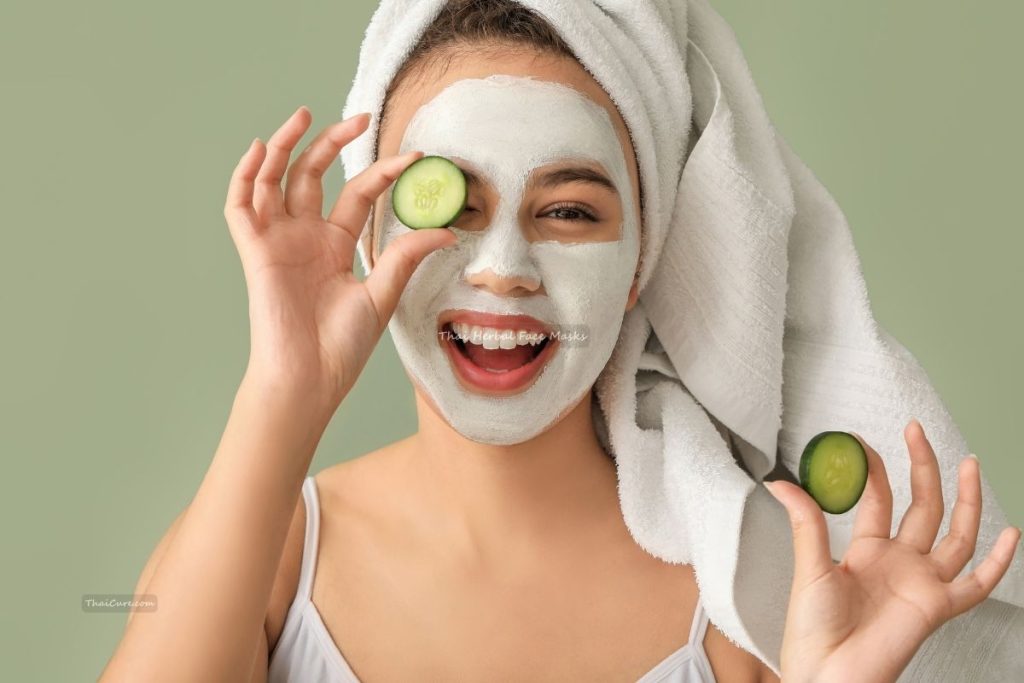
These easy Thai herbal face masks use familiar ingredients and straightforward preparation methods. The guide also explains patch testing, choosing ingredients for different skin types, avoiding common mistakes, and knowing when not to apply a homemade mask.
The aim is to support a gentle skincare routine rather than promise permanent glowing skin, acne treatment, skin whitening, or medical results.
👉 “Readers interested in gentle skincare routines may also explore how facial massage may support skin wellness for additional self-care ideas.”
What Are Thai Herbal Face Masks?
Thai herbal skincare draws inspiration from plants and ingredients used in Thai homes, cooking, traditional wellness, and beauty practices.
Common ingredients may include:
- Turmeric
- Aloe vera
- Cucumber
- Rice powder
- Tamarind
- Honey
- Yogurt
- Coconut milk
- Pandan
- Kaffir lime
- Mung bean powder
- Butterfly pea flowers
Not every ingredient is suitable for direct facial use. Some must be diluted, prepared carefully, or avoided entirely on sensitive skin.
The safest Thai herbal face masks generally use a small number of mild ingredients. Complicated mixtures make it harder to identify what caused irritation if the skin reacts.
What Can A Face Mask Do?
A homemade face mask may temporarily support the appearance and feel of the skin by:
- Adding surface moisture
- Removing excess oil
- Softening dry patches
- Providing gentle exfoliation
- Cooling warm or tired-feeling skin
- Supporting a relaxing skincare routine
- Improving the temporary appearance of dullness
Results depend on the ingredient, skin type, preparation method, and how frequently the mask is used.
Face masks cannot permanently change skin colour, erase pores, remove deep wrinkles, or cure skin conditions.
Anyone experiencing ongoing acne, eczema, rosacea, infection, unexplained rashes, or significant irritation should seek advice from a qualified healthcare or skincare professional.
Always Patch-Test First
Patch testing is one of the most important steps before using Thai herbal face masks.
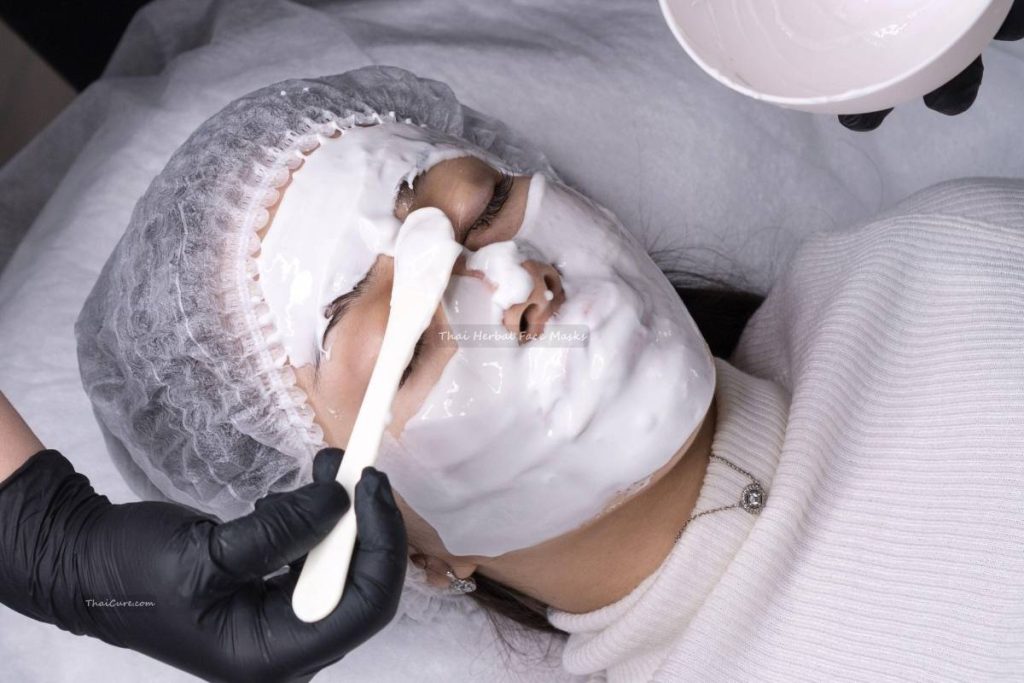
Apply a small amount of the prepared mixture to a discreet area, such as behind the ear or along the inner arm.
Leave it on for the intended application time, rinse it off, and watch the area for at least 24 hours.
Do not use the mask on the face if the test area develops:
- Redness
- Burning
- Itching
- Swelling
- Blisters
- Hives
- Persistent dryness
A successful patch test does not guarantee that the face will not react, but it can reduce unnecessary risk.
Patch-test each new recipe, even when you have used some of its ingredients before.
Prepare The Skin And Equipment
Clean preparation is essential when making homemade skincare.
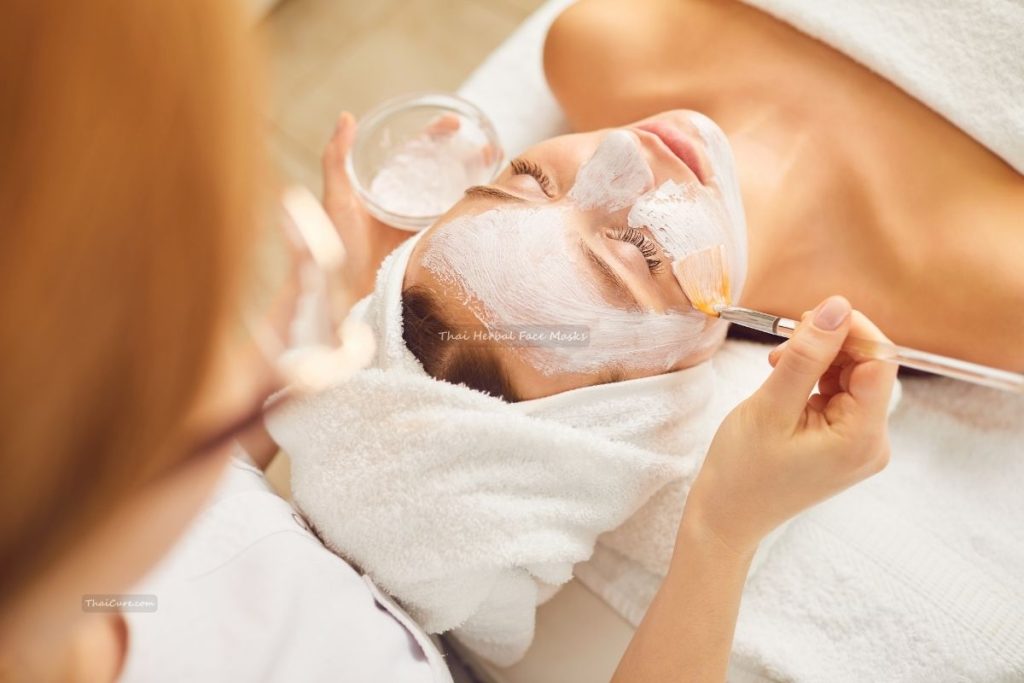
Before mixing Thai herbal face masks:
- Wash your hands
- Clean the bowl and spoon
- Use fresh ingredients
- Wash fruit, vegetables, and herbs
- Remove makeup
- Cleanse the face gently
- Tie hair away from the face
- Prepare clean water and a towel
Avoid using metal equipment when working with highly acidic ingredients if another suitable bowl is available.
Make only enough for one application unless the recipe specifically stores well. Homemade masks do not contain commercial preservatives and may quickly grow bacteria or mould.
Simple Turmeric And Yogurt Face Mask
Turmeric is widely used in Thai cooking and traditional household beauty practices. It gives food and skincare mixtures a strong yellow colour.
For a gentle mask, combine:
- One teaspoon plain unsweetened yogurt
- A very small pinch of turmeric
- One teaspoon finely ground oats or rice powder, if needed
Mix until smooth.
Apply a thin layer, avoiding the eyes and lips. Leave it on for five to ten minutes, then rinse thoroughly with lukewarm water.
This is one of the best-known Thai herbal face masks, but turmeric should be used sparingly. Too much can temporarily stain the skin, towels, clothing, and bathroom surfaces.
Yogurt contains lactic acid and may irritate very sensitive skin. People with milk allergies should not use this recipe.
Turmeric And Aloe Vera Mask
Aloe vera creates a lighter mask than yogurt.
Mix:
- One tablespoon pure aloe vera gel
- A tiny pinch of turmeric
Apply a thin layer for approximately five minutes.
Rinse immediately if the mask begins to sting or feel hot.
Choose plain aloe vera gel without fragrance, strong alcohol, menthol, or unnecessary colouring.
Fresh aloe taken directly from a plant must be prepared carefully. The yellow latex beneath the leaf skin can irritate the skin and should not be included.
This mild version of Thai herbal face masks may feel cooling, but both aloe and turmeric can still cause reactions.
Cooling Aloe Vera And Cucumber Mask
Cucumber contains a high amount of water and can provide a cooling sensation.
To prepare the mask:
- Grate or blend two tablespoons of peeled cucumber
- Add one tablespoon of plain aloe vera gel
- Mix well
Apply the mixture to clean skin for ten minutes, then rinse.
Use freshly cut cucumber and clean equipment. Do not store the leftover mixture for another day.
The cooling effect can make this one of the most relaxing Thai herbal face masks after time in warm weather. However, it should not be applied to sunburned, blistered, or damaged skin without professional guidance.
Simple Cucumber Mask
A cucumber mask can be prepared without additional herbs.
Blend or finely grate chilled cucumber and apply a thin layer to the face.
Leave it on for approximately ten minutes.
Cucumber is generally milder than acidic fruit, but an allergy or reaction is still possible.
This simple option may suit people who want to begin with Thai herbal face masks containing only one ingredient.
Rice Powder And Honey Mask
Rice is central to Thai food and appears in many traditional beauty preparations across Asia.
Finely ground rice powder can create a soft paste when combined with honey and water.
Mix:
- One teaspoon very fine rice powder
- One teaspoon honey
- Enough clean water to form a soft paste
Apply gently without scrubbing.
Leave the mask on for five to ten minutes and rinse with water.
Rice particles can be abrasive when they are coarse. Use only a finely milled cosmetic-grade or food-safe powder and avoid rubbing it against the skin.
Among Thai herbal face masks, this recipe should be treated as a mask rather than a strong facial scrub.
Rice Powder And Aloe Vera Mask
For a honey-free version, combine:
- One teaspoon fine rice powder
- One tablespoon aloe vera gel
Mix until smooth and apply a thin layer.
Allow it to sit for five minutes before rinsing carefully.
Add more aloe if the mixture feels rough or dry.
This recipe may help the skin feel smoother temporarily, but frequent physical exfoliation can damage the skin barrier.
Use this mask occasionally rather than every day.
Honey And Aloe Vera Mask
Honey is often included in homemade skincare because it creates a soft, sticky mask and helps hold moisture on the skin’s surface.
Combine:
- One teaspoon honey
- One tablespoon plain aloe vera gel
Apply for approximately ten minutes and rinse thoroughly.
Do not use honey-based Thai herbal face masks if you have an allergy to honey, pollen, bees, or related products.
Honey should not be used on infected, broken, or severely irritated skin without professional advice.
A sticky mask can also be difficult to remove, so use lukewarm water and avoid aggressive rubbing.
Tamarind And Honey Mask
Tamarind is common in Thai cooking and is also associated with traditional body-care preparations.
It contains natural acids and can be irritating when used too strongly.
For a very mild facial mixture, combine:
- Half a teaspoon of smooth tamarind pulp
- Two teaspoons of honey or aloe vera
- One teaspoon of water
Apply only after patch testing.
Leave it on for no more than three to five minutes before rinsing thoroughly.
Tamarind-based Thai herbal face masks are not suitable for highly sensitive skin, damaged skin, active irritation, or use immediately before strong sun exposure.
Never apply concentrated tamarind paste directly to the face.
Mild Tamarind And Yogurt Mask
Another diluted option uses:
- Half a teaspoon tamarind pulp
- One tablespoon plain yogurt
Mix until completely smooth.
Apply a very thin layer and remove it after three to five minutes.
This mixture combines natural acids from both tamarind and yogurt, so it may be too strong for some people.
Do not combine this mask with retinoids, exfoliating acids, strong vitamin C products, scrubs, or other potentially irritating skincare on the same day.
Mung Bean Powder Face Mask
Mung bean powder is used in some Asian skincare preparations and can be mixed into a simple cleansing mask.
Combine:
- One tablespoon finely ground mung bean powder
- Enough water or aloe vera gel to create a smooth paste
Apply without scrubbing and leave it on for approximately five minutes.
Rinse before the mask dries completely and begins pulling at the skin.
Mung bean Thai herbal face masks may suit oily-feeling skin, but they can be drying if left on for too long.
People with dry or sensitive skin can add more aloe vera and use less powder.
Pandan And Aloe Vera Mask
Pandan is best known for its sweet aroma in Thai desserts and drinks.
A gentle pandan-inspired mask can be prepared using a mild pandan infusion rather than raw concentrated juice.
To make the infusion:
- Wash one pandan leaf
- Cut it into pieces
- Steep it in hot water
- Allow the water to cool completely
- Strain it carefully
Mix one teaspoon of the infusion with one tablespoon of aloe vera gel.
Apply for five to ten minutes and rinse.
Pandan Thai herbal face masks should be made fresh. Avoid artificial pandan flavouring, food colouring, and heavily perfumed pandan products.
Butterfly Pea And Aloe Mask
Butterfly pea flowers produce a deep blue colour and are used in Thai drinks, desserts, and traditional preparations.
Prepare a weak infusion with clean dried flowers and hot water. Let it cool and strain it.
Mix:
- One teaspoon butterfly pea infusion
- One tablespoon aloe vera gel
Apply a thin layer for approximately five minutes.
The colourful appearance can make these Thai herbal face masks visually appealing, but colour alone does not prove a skincare benefit.
Use plain flowers without sugar, flavouring, or mixed herbal ingredients.
Coconut Milk And Rice Mask
Coconut milk can add richness to a dry-feeling mask.
Combine:
- One teaspoon coconut milk
- One teaspoon fine rice powder
- Enough water to soften the mixture if necessary
Apply gently for five minutes and rinse thoroughly.
Coconut milk may feel heavy on oily or acne-prone skin. It can also cause reactions in people sensitive to coconut.
This is one of the richer Thai herbal face masks, so it may be better suited to skin that feels dry rather than oily.
Do not use sweetened coconut cream or coconut dessert products.
Banana And Honey Mask
Bananas are widely available in Thailand and can create a soft, easy-to-apply mask.
Mash:
- One tablespoon ripe banana
- One teaspoon honey
Mix until smooth and apply for ten minutes.
Rinse carefully so no fruit remains around the hairline or nose.
Banana-based Thai herbal face masks can feel moisturising, but fruit residue should not be left on the skin for a long period.
Use a fresh banana and discard leftovers.
Papaya Face Masks Require Extra Care
Papaya contains enzymes that can irritate sensitive skin.
Although papaya frequently appears in homemade beauty recipes, it should not be used casually in large amounts or left on the face for a long period.
People with latex allergies may also react to papaya.
A very diluted, patch-tested mixture may be tolerated by some individuals, but safer and gentler ingredients such as cucumber or aloe vera are better starting points.
Not every traditional or tropical ingredient belongs in everyday Thai herbal face masks.
Kaffir Lime Should Be Used Cautiously
Kaffir lime is aromatic and important in Thai food and household traditions. However, concentrated lime juice, peel oils, and essential oils can irritate facial skin.
Citrus ingredients may also increase sensitivity to sunlight in certain circumstances.
Avoid applying undiluted kaffir lime juice, lime peel, or essential oil directly to the face.
For home skincare, it is safer to enjoy kaffir lime in cooking, baths, or carefully formulated commercial products rather than improvised facial recipes.
Gentle Thai herbal face masks do not need strong citrus juice to be effective as a relaxing beauty treatment.
Avoid Undiluted Essential Oils
Essential oils are highly concentrated.
Tea tree, kaffir lime, lemongrass, peppermint, eucalyptus, and other oils should not be added casually to homemade face masks.
Possible problems include:
- Burning
- Redness
- Allergic reactions
- Dryness
- Increased sun sensitivity
- Eye irritation
Water does not properly dilute essential oils because oil and water separate.
Unless a formulation has been created by someone with appropriate cosmetic knowledge, essential oils are best left out of homemade Thai herbal face masks.
Choosing A Mask For Dry Skin
Dry-feeling skin may prefer masks based on:
- Aloe vera
- Honey
- Yogurt
- Banana
- A small amount of coconut milk
- Fine rice powder used gently
Avoid allowing clay-like or powder-heavy masks to dry completely.
After rinsing, apply a simple fragrance-free moisturiser.
Homemade masks provide only temporary surface effects and should not replace a consistent moisturising routine.
Choosing A Mask For Oily Skin
Oily-feeling skin may prefer:
- Aloe vera
- Cucumber
- Mung bean powder
- Yogurt
- Fine rice powder
- A very mild tamarind mixture
Do not try to remove all oil from the skin. Aggressive cleansing and frequent drying masks may damage the skin barrier and create more irritation.
Use Thai herbal face masks occasionally and continue using a gentle cleanser and suitable moisturiser.
Choosing A Mask For Sensitive Skin
Sensitive skin requires the simplest approach.
Begin with one mild ingredient, such as:
- Plain aloe vera gel
- Cucumber
- Finely ground oats mixed with water
Avoid turmeric, tamarind, citrus, strong herbs, essential oils, and heavily scented ingredients until you know how the skin responds.
Even gentle ingredients should be patch-tested.
People with rosacea, eczema, recurring dermatitis, or known allergies should consult a qualified professional before experimenting with homemade products.
How Often Should You Use A Face Mask?
Most people do not need a homemade face mask every day.
A reasonable starting point is once a week or less.
Using several Thai herbal face masks within a short period can make it difficult to identify irritation and may disturb the skin barrier.
Reduce frequency if the skin becomes:
- Tight
- Dry
- Red
- Itchy
- Rough
- More sensitive
Skin does not need to tingle, burn, or peel for a mask to be working.
How Long Should A Mask Stay On?
Most gentle homemade masks can remain on the skin for approximately five to ten minutes.
Acidic ingredients such as tamarind should be removed sooner.
Never leave a new mask on overnight.
Rinse immediately if you notice:
- Burning
- Strong tingling
- Itching
- Swelling
- Increasing redness
Allowing a mask to dry completely is not always beneficial. Some mixtures become tight and uncomfortable as water evaporates.
How To Rinse A Face Mask
Use lukewarm water rather than very hot water.
Gently loosen the mask with wet fingertips and rinse without scrubbing.
Pat the skin dry with a clean, soft towel.
After using Thai herbal face masks, apply a plain moisturiser suitable for your skin type.
During the day, use appropriate sun protection, especially after using ingredients with mild exfoliating properties.
Ingredients That Should Not Be Mixed Carelessly
Avoid combining homemade masks with several strong ingredients at once.
Potentially irritating combinations include:
- Tamarind and lime juice
- Turmeric and strong essential oils
- Yogurt and concentrated fruit acids
- Physical scrubs and acidic masks
- Citrus and retinoid skincare
- Multiple exfoliating ingredients
More ingredients do not necessarily produce better results.
The safest Thai herbal face masks usually contain one main active ingredient and one mild base.
Common Beginner Mistakes
Using Too Much Turmeric
A large amount may stain the skin and cause irritation.
Scrubbing With Coarse Rice
Rough rice particles can create tiny abrasions and damage sensitive skin.
Applying Concentrated Tamarind
Tamarind must be diluted and used for only a short time.
Using Lemon Or Lime Juice Directly
Concentrated citrus juice can irritate the skin and increase sensitivity.
Leaving A Mask On Overnight
Homemade mixtures are not designed for overnight use.
Storing Masks For Several Days
Fresh masks lack preservatives and may grow microorganisms.
Skipping The Patch Test
An ingredient used safely in food can still cause a skin reaction.
Applying Masks To Broken Skin
Avoid cuts, infections, active rashes, severe acne lesions, and recently shaved or waxed areas.
Expecting Instant Transformation
Face masks may provide a temporary fresh or soft appearance, but they do not permanently transform the skin.
Avoiding these mistakes makes Thai herbal face masks safer and more comfortable.
Can Homemade Masks Be Stored?
Most homemade masks should be made and used immediately.
Mixtures containing fruit, vegetables, yogurt, coconut milk, aloe, or herbal water spoil quickly.
Refrigeration does not make an unpreserved cosmetic product reliably safe for long-term use.
Dry powders can be stored separately in clean, dry containers. Add water, aloe, honey, or yogurt only when preparing one application.
Discard any mixture that changes colour, smell, texture, or develops visible growth.
Building A Simple Thai-Inspired Skincare Routine
A face mask is only one part of skincare.
A practical routine may include:
- Gentle cleansing
- Suitable moisturiser
- Sun protection during the day
- Limited exfoliation
- Occasional face masks
- Avoiding known irritants
- Removing makeup before sleep
Choose one of the milder Thai herbal face masks once a week and observe how the skin responds.
Do not introduce several new products and masks at the same time.
When To Stop Using Homemade Masks
Stop immediately if the skin develops persistent irritation.
Seek professional advice if you experience:
- Significant swelling
- Blistering
- Severe burning
- Widespread rash
- Eye irritation
- Difficulty breathing
- Ongoing redness
- Signs of infection
Severe allergic symptoms require urgent medical attention.
Do not repeatedly apply the same ingredient in the hope that the skin will become accustomed to it.
👉 “Readers interested in natural face care may also explore these organic Thai skincare ingredients for healthy-looking skin for more ideas to support a simple beauty routine.”
Conclusion
Easy Thai herbal face masks can bring ingredients such as turmeric, aloe vera, cucumber, rice, tamarind, pandan, mung bean, butterfly pea, coconut milk, and honey into a gentle home skincare routine.
The simplest recipes are often the best. Aloe vera and cucumber may provide a cooling sensation, while honey, yogurt, banana, and coconut milk can make the skin feel temporarily softer. Fine rice or mung bean powder can add gentle texture when used without aggressive scrubbing.
Stronger ingredients need greater caution. Turmeric may stain, tamarind can irritate, papaya contains active enzymes, and concentrated citrus or essential oils should not be applied casually to facial skin.
Always patch-test Thai herbal face masks, use clean equipment, prepare only one application, and remove the mask immediately if it burns or itches. Avoid applying homemade mixtures to broken, infected, sunburned, or severely irritated skin.
A face mask cannot permanently create glowing skin or treat a medical condition. Healthy-looking skin is better supported by gentle cleansing, moisturising, sun protection, suitable nutrition, adequate rest, and professional care when needed.
Used carefully and occasionally, Thai herbal face masks can become an enjoyable Thai-inspired self-care ritual without making unrealistic beauty or medical promises.
FAQ
What Are The Best Thai Herbs For A Homemade Face Mask?
Common options include turmeric, aloe vera, pandan, butterfly pea, and mild herbal infusions. Ingredients should be diluted appropriately and patch-tested.
Can Turmeric Make The Skin Glow?
Turmeric may temporarily brighten the appearance of dull skin, but results vary. Too much turmeric can stain or irritate the skin.
How Often Can I Use Thai Herbal Face Masks?
Once a week or less is a reasonable starting point. Reduce the frequency if the skin becomes dry, tight, red, or sensitive.
Can I Leave A Herbal Face Mask On Overnight?
No. Homemade masks should normally be removed after five to ten minutes, or sooner when they contain acidic ingredients.
Is Tamarind Safe For The Face?
Diluted tamarind may be tolerated by some people, but its natural acids can irritate sensitive skin. Patch-test it and use it only briefly.
Can I Use Lime Juice In A Face Mask?
Undiluted lime juice is not recommended because it can irritate the skin and may increase sensitivity to sunlight.
Are Natural Face Masks Safe For Sensitive Skin?
Not always. Natural ingredients can cause irritation and allergies. Sensitive skin should begin with simple, mild ingredients after patch testing.
Can Homemade Face Masks Be Refrigerated?
Most wet homemade masks should be used immediately and discarded afterwards. Refrigeration does not replace proper cosmetic preservation.
Should I Moisturise After Using A Face Mask?
Yes. After rinsing, apply a simple moisturiser suitable for your skin type to support the skin barrier.
When Should I Avoid A Homemade Face Mask?
Avoid masks on broken skin, active rashes, infections, severe acne irritation, sunburn, or immediately after waxing, shaving, or strong exfoliation.


